Home of Hepatology7 rue Daubin1203 GenevaSwitzerland+41 22 807 03 60easloffice@easloffice.eu© 2025 EASL. All rights reserved.Website by Soto.Privacy Policy | Cookie Policy | Terms & Conditions | Cyber Security Explore offerUnlock the full potential of being part of the EASLcommunity. As a member, you’ll gain access toexclusive resources, reduced event fees, top-tierjournals, and professional development opportunitiesdesigned to support your career in hepatologyBecome a memberNurses & Allied Health ProfessionalsLink titleYoung InvestigatorsLink titleBasic ScienceLink titleTitle here Lorem ipsum At the heart of EASL is a diverse and dynamic international community of professionals dedicated to advancing hepatology.Discover how you can get involved and make an impact.Whether you're a member, a Young Investigator, a nurse or allied health professional, or focused on basic science, there's a place for you here. Explore the different pathways to connect, grow and contribute, from membership benefits to tailored programmes and scientific networksLorem ipsum dolor sit ipsum CommunitySign In / Sign UpResourcesWhat We DoAbout Us Partnerships

Mentorships

Become a mentee

The EASL Mentorship Programme was created to guide young scientists and clinicians through a crucial stage in their career path by encouraging scientific exchange and fostering personal developmental relationships with a more experienced and knowledgeable hepatologist or senior scientist.

About EASL Mentorships

This Mentorship Programme offers young scientists or clinicians the opportunity to receive support from an international and independent experienced senior colleague. By matching mentees with a senior hepatologist or senior basic scientist as mentor, the Mentorship Programme aims at enhancing scientific exchange and personal developmental relationships. This is achieved by supporting and advising junior scientific researchers and junior clinicians in their career choices and scientific growth.

EASL offers two types of mentorship formats to accommodate different preferences and availabilities:


Classic (face-to-face) mentorships

Mentor and mentee meet in person during EASL Congress, with the possibility of organising a visit to the mentor’s institution during the year.

Virtual mentorships

Mentor and mentee connect exclusively online, through regular (monthly) meetings and ongoing communication.

Benefits for Mentees (Classic Mentorships)

Personal development

Monthly virtual meetings between Mentor and Mentee

Complimentary registration to EASL Congress

EUR 800 bursary to support travel and accommodation to attend EASL Congress

Up to EUR 1,200 EUR financial support to visit Mentor’s institute or support other beneficial educational activity as agreed with Mentor.

Benefits for Mentees (Virtual Mentorships)

Personal development

Monthly virtual meetings between Mentor and Mentee

Complimentary registration to EASL Congress

Discover the Mentors for 2026

  • Classic and/or Virtual
  • Basic science
  • Scientific guidance
  • Networking opportunities
  • Specific technical or research expertise
  • Virtual
  • Liver Tumours
  • Basic Science
  • Metabolism, Alcohol and Toxicity
  • Scientific guidance
  • Networking opportunities
  • Specific technical or research expertise
  • Classic and / or Virtual
  • General hepatology
  • Cirrhosis and its complications
  • Public health
  • Alcohol
  • Career advice (especially for nurses and other AHP’s).
  • Research experience.
  • Establishing networks.
  • Classic
  • Immune-mediated and cholestatic liver disease
  • Scientific guidance
  • Networking opportunities
  • Career advice
  • Classic and/or Virtual
  • General hepatology
  • Cirrhosis and its complications
  • Liver transplantation
  • Leadership and education
  • Liver Nurse leadership – expertise in creating and developing robust liver nurse organisations at national and European level.
  • Liver Nurse education – expertise in teaching all aspects of liver disease and liver transplantation and how to develop robust educational programmes and resources.
  • Liver Nurse networking – breadth of clinical contacts across Europe and the World which can help to support development, collaboration, and networking opportunities.  
  • Classic and/or Virtual
  • Liver Tumours
  • Scientific guidance
  • Networking opportunities
  • Career advice
  • Classic and/or Virtual
  • Cirrhosis and its complications
  • Extensive international network offering opportunities for collaboration and professional development.
  • Scientific guidance across both clinical and translational research
  • Advanced clinical and technical expertise in the management of portal hypertension and vascular liver diseases.
  • Virtual
  • Viral hepatitis
  • Qualitative methodologies/methods
  • Mixed Methods
  • Implementation Science
  • Clinical academic career development for nurses and AHPs.
  • Classic
  • Public health
  • Scientific guidance including research methodologies
  • International networking opportunities,
  • Career advice beyond the immediate liver space
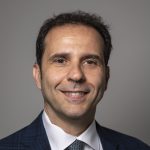
Francesco Negro
Divisions of Gastroenterology and Hepatology of Clinical Pathology, University Hospital of Geneva
  • Classic and/or Virtual
  • Viral Hepatitis
  • Public Health
  • Mentorship on all aspects of viral hepatitis research, from basic science to public health
  • Career counselling and guidance for young researchers and clinicians
  • Promotion of critical thinking, with emphasis on cognitive biases and the culture of error in medical decision-making
  • Insight into how to navigate the interface between clinical hepatology and health policy, including effective engagement with policymakers
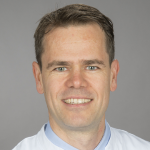
Markus Peck
Austria
  • Classic and/or Virtual
  • Cirrhosis and its complications
  • Liver tumours
  • Career advice
  • Networking opportunities
  • Community hospital experience
  • Classic and/or Virtual
  • Liver transplantation
  • Viral hepatitis
  • Scientific guidance
  • Networking opportunities
  • Specific technical or research expertise
  • Classic and/or Virtual
  • Metabolism, Alcohol, and Toxicity
  • Clinical Hepatology and translation research focusing on mechanisms of liver injury
  • Referral pathways in MASLD and other chronic liver disease
  • In- and out-patient care with metabolic disease
  • Interventional Hepatology including endoscopy
  • Mentoring on scientific publications
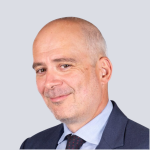
Emmanuel Tsochatzis
United Kingdom
  • Classic and/or Virtual
  • Metabolism, Alcohol, and Toxicity
  • Cirrhosis and its complications
  • Career advice
  • Scientific guidance
  • Networking opportunities
  • Research expertise in Metabolism, Alcohol and Toxicity, or Cirrhosis and its complications
Luca Valenti
Italy
  • Classic and/or Virtual
  • Basic Science
  • Metabolism, Alcohol and Toxicity
  • Scientific guidance in the field of translational hepatology,
  • Special focus and reasearch expertise on genetics and metabolic liver disesases
  • Specific expertise in genetics, precision medicine, metabolic disorders, modelling on liver disease in human liver organoids
José Willemse
the Netherlands
  • Classic and/or Virtual
  • Cirrhosis and its complications
  • Viral hepatitis
  • Liver tumours
  • Metabolism, alcohol, and toxicity
  • Immune-mediated and cholestatic liver disease
  • Public health
  • General hepatology
  • Liver transplantation & surgery
  • Patient perspective in health care and research
  • Patients perspective: knowledge about unmet needs, impact on quality of life, patients empowerment, communication with patients, landscape of patients organisations in Europe (and globally).
  • Role of patients organisations in research, how to integrate patients perspective in research (applications).
  • Public health: information to the public, lack of knowledge, awareness programme.
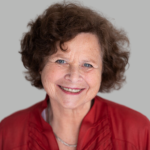
Felicity Williams
United Kingdom
  • Classic and/or Virtual
  • TBC
  • Scientific guidance
  • Networking opportunities
  • Specific technical or research expertise
  • Classic and/or Virtual
  • Viral hepatitis
  • Scientific guidance
  • Networking opportunities
  • Specific technical or research expertise

How to become a Mentee

  • To apply, you will need to provide the following:

    • A complete CV: Demonstrate your strong interest in hepatology and/or liver research.
    • An abstract: Accepted at a scientific congress/medical congress/conference.
    • Or a publication: Published.
    • A cover letter: Detail your interest in the Mentorship Programme, explaining which mentor you would like to choose and why, and stating the objective(s) which you, the mentee, would like to achieve. Also indicate if you are interested in the Classic (face-to-face) Mentorship, the Virtual Mentorship, or if you are open to both options.
    • A letter of recommendation: From a former or current supervisor or Head of Institute/Head of Department.

    All applications will be reviewed by the Educational Committee and are to be submitted in English.

    EASL will process the applicant’s personal data as provided in the application dossier. The applicant gives his/her consent to such control and processing of his/her personal data. EASL will handle the applicant’s personal data in accordance with all applicable legislation for the purpose of reviewing the candidate’s suitability for the Mentorship.

Applications for the EASL Mentorships Programme 2026 are closed. Applications for the 2027 programme will open in autumn 2026.

Mentorships are to begin, latest, January of the year following application and should last for one year. Extended programmes cannot be requested or accepted.

  • Must be a registered EASL member.
  • Should be under the age of 35 at the time of application and/or still in training. The age limit does not apply to Nurses or AHPs.
  • Must not hold a permanent position.
  • For face-to-face mentorships, the home institution must be European and located in a different European country from the mentor’s institution.
  • No geographic restrictions apply for virtual mentorships.
  • No restriction on the applicant’s nationality.
  • The Mentors and Mentees are invited to attend the EASL Congress.

Questions regarding EASL Mentorship should be sent to easlmentorship@easloffice.eu

How to become a Mentee

  • Barbora Smolkova
  • Christian Molina Aguilar
  • Christopher Mysko
  • Kamela Gjini
  • Mario Romeo
  • Francesca Bolis
  • Wedad Ashkar
  • Alexis Couret
  • Basil Duwa
  • Lucia Lameroli
  • Paula Fernandez Palanca
  • Victoria Blary
  • Antonio Liguori
  • Sven Francque
  • Katharina Hupa-Breier
  • Shira Zelber-Sagi
  • Laurens Van Kleef
  • Jörn Schattenberg
  • Trenton White
  • Loreta Kondili
  • Bastian Engel
  • Ferya Çelik
  • Nuria Fabrellas
  • Joost Boeckmans
  • Jörn Schattenberg
  • Verena Keitel
  • Pavitra Kumar
  • Krista Rombouts
  • Eleni-Myrto Trifylli
  • Jesus M. Banales
  • Hasan Eruzun 
  • Henning Gronbaek
  • Francesca Aprile
  • Andrea de Gottardi
  • Iulia Minciuna
  • Jean-Francois Dufour
  • Andrés Conthe
  • Thomas Berg
  • Coskun Ozer Demirtas
  • Maurizia R. Brunetto
  • Iuliana Nenu
  • Olivier Chazouilleres
  • Marta Afonso
  • Peter R. Galle
  • Vitor Magno Pereira
  • Michael Trauner
  • Mario Strazzabosco
  • Maria Chiara Sorbo
  • Jean-Francois Dufour
  • Emma Andersson
  • Sharat Varma
  • Ulrich Beuers
  • Nina Kimer
  • Marsha Y Morgan
  • Jelena Martinov
  • Michael Manns
  • Georgina Minzala
  • Dominique-Charles Valla
  • Alina Habic
  • Peter Jansen 
  • Natalia Tikhonova
  • Peter Ferenci
  • Bogdan Procopet 
  • Bulent Baran
    Massimo Colombo
  • Jaime Bosch
Scroll to Top

Search EASL