
Home of Hepatology7 rue Daubin1203 GenevaSwitzerland+41 22 807 03 60easloffice@easloffice.eu© 2025 EASL. All rights reserved.Website by Soto.Privacy Policy | Cookie Policy | Terms & Conditions | Cyber Security Explore offerUnlock the full potential of being part of the EASLcommunity. As a member, you’ll gain access toexclusive resources, reduced event fees, top-tierjournals, and professional development opportunitiesdesigned to support your career in hepatologyBecome a memberNurses & Allied Health ProfessionalsLink titleYoung InvestigatorsLink titleBasic ScienceLink titleTitle here Lorem ipsum At the heart of EASL is a diverse and dynamic international community of professionals dedicated to advancing hepatology.Discover how you can get involved and make an impact.Whether you're a member, a Young Investigator, a nurse or allied health professional, or focused on basic science, there's a place for you here. Explore the different pathways to connect, grow and contribute, from membership benefits to tailored programmes and scientific networksLorem ipsum dolor sit ipsum CommunitySign In / Sign UpResourcesWhat We DoAbout Us Partnerships

News

Liver enthusiasts who paved the way: 50 years of the Gnomes

Professional societies play a major role in medicine and science. These societies tend to be large, with well-developed administrative structures. An additional model, however, is based on small groups of experts who meet regularly in an egalitarian model, to discuss disease-specific scientific and medical problems. To illustrate the effectiveness of this model, the history and practices of a long-standing successful example, the International Liver Pathology Group – better known as “the Gnomes” – has been recorded.

The Gnomes emerged spontaneously in 1967 when a group of expert hepatologists and liver pathologists met to take on one of the most pressing problems of the day — how should chronic hepatitis be conceptualised, and what terms should be used to capture the various injury patterns seen on liver biopsy?

In 2018, the Gnomes celebrated their 50th anniversary, having both survived and thrived. Why have the Gnomes been successful and lasted so long? The success of the Gnomes’ approach provides a roadmap for future small scientific groups.

This open-access article was published in June 2020 in Virchows Archive: The Official Journal of the European Society of Pathology. It provides a historical overview of the Gnomes: the group’s origins, its development over 50 years, its contributions and achievements. It names the members, describes the group’s modus operandi, scholarly contributions, and the organisational structures that contributed to its success; it explores the central role that histomorphology played and looks towards the future of the Gnomes.

Read the full open-access article:

Torbenson, M., Desmet, V., Denk, H. et al. Fifty years of impact on liver pathology: a history of the Gnomes. Virchows Arch (2020). https://doi.org/10.1007/s00428-020-02879-5
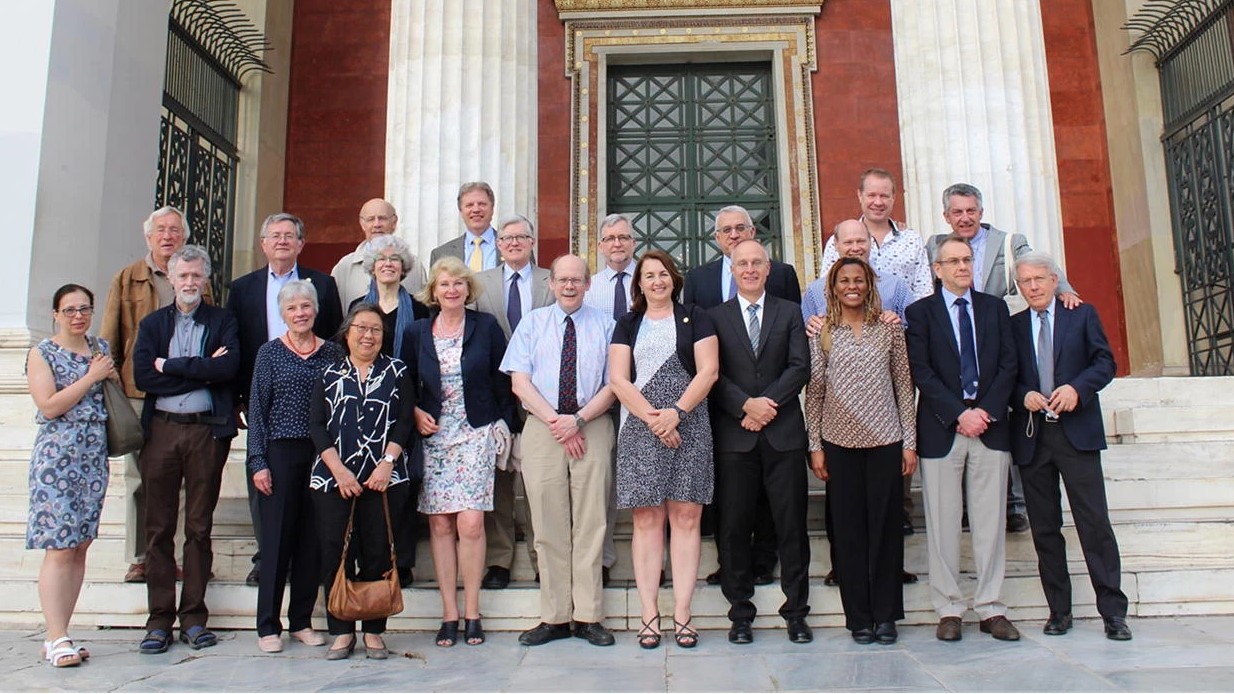
Athens 2018 50th anniversary meeting—host Dina Tiniakos. Back row, left to right: Hans Dienes, Zack Goodman, Pierre Bedossa, Eve Roberts, Mike Torbenson, Ian Wanless, Alastair Burt, Luigi Terracciano, Andrew Clouston, Jim McGown (Gnome mate), Dimitrios Dougenis (Gnome mate). Front row, left to right: Yvonne Bury (observer), Ton Groothuis (Gnome mate), Jamie Goodman (Gnome mate), Annette Gouw, Heidi Dienes (Gnome mate), David Kleiner (new member), Dina Tiniakos, Peter Schirmacher (new member), Vanessa Torbenson (Gnome mate), Stefan Hübscher, and Francesco Callea (Elisabeth Brunt not in attendance)
Share
Scroll to Top

Search EASL