
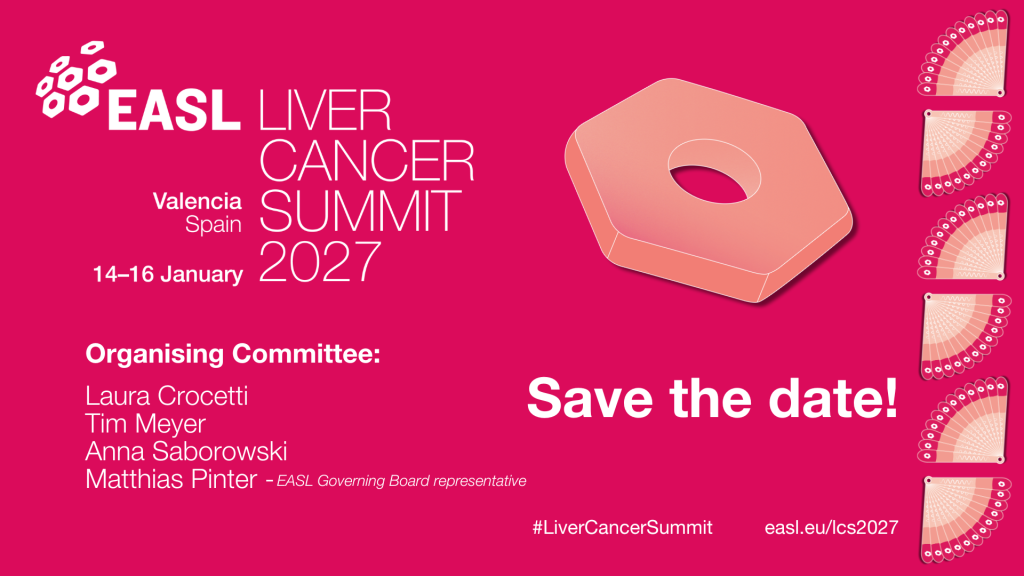
Discover what is changing in liver cancer. The Liver Cancer Summit 2027 will showcase the scientific and clinical advances that are redefining our understanding of primary liver cancers, from disease mechanisms and tumour biology to diagnosis, treatment, and long-term patient care. Explore the latest developments in early detection and prevention, spatial analysis, real-world evidence, and next-generation therapies, and gain insights into the innovations that are shaping the future of hepatobiliary oncology.
Translate progress into practice and connect with a multidisciplinary community. Engage with new evidence, emerging treatment strategies, and ongoing studies that are influencing tomorrow’s standards of care, while considering how these advances can be meaningfully applied in real-world clinical settings. Through expert-led sessions, oral abstract presentations, poster presentations and interactive discussions, the EASL Liver Cancer Summit offers a unique opportunity to connect with clinicians, researchers, allied health professionals and patient representatives, from across the liver cancer landscape, fostering collaboration and a shared commitment to improving outcomes for patients with liver cancer.
Scope
The Liver Cancer Summit 2027 will provide a comprehensive overview of the latest advances in primary liver cancers, spanning basic, translational, and clinical research. The programme will explore the entire continuum of liver cancer, from prevention and early detection to innovative treatment strategies and long-term patient management. Through multidisciplinary sessions covering tumour biology, the tumour microenvironment, novel diagnostic technologies, precision oncology, real-world evidence, and emerging therapeutic approaches, the EASL Liver Cancer Summit aims to bridge scientific discovery and clinical practice, fostering collaboration and accelerating progress towards better outcomes for patients with liver cancer.
Learning objectives
By the end of the EASL Liver Cancer Summit 2027, participants will be able to:
Review the latest scientific and clinical advances reshaping the understanding, diagnosis, and management of primary liver cancers.
Interpret emerging evidence on tumour biology, immune mechanisms, resistance, biomarkers, and personalised therapeutic strategies.
Assess current and future approaches to multidisciplinary care, including surgical, locoregional, systemic, and supportive treatment pathways.
Apply new knowledge to complex clinical decision-making, taking into account liver function, tumour characteristics, patient needs, quality of life, and healthcare resources.
Explore how translational research, innovative clinical trials, and real-world data can accelerate progress and improve outcomes for patients with liver cancer.
Top reasons to attend
DISCOVER WHAT IS CHANGING
Explore the scientific and clinical advances that are redefining our understanding of primary liver cancer, from disease mechanisms and tumour biology to diagnosis, treatment, and long-term patient care.
TRANSLATE PROGRESS INTO PRACTICE
Engage with new evidence, emerging strategies, and ongoing studies that are shaping tomorrow’s standards, while considering how innovation can be meaningfully applied in real-world clinical settings.
JOIN A MULTIDISCIPLINARY COMMUNITY
Connect with colleagues from across the liver cancer landscape in an open and collaborative environment where different perspectives, specialties, and experiences come together around a shared mission.
Welcome Message
Dear Friends,
The field of liver cancer is moving at an extraordinary pace — and the EASL Liver Cancer Summit is where the world comes to keep up.
The EASL Liver Cancer Summit returns in Valencia in January 2027, reuniting the international liver cancer community for an unmissable exchange of knowledge, experience, and ideas at the forefront of the field.
This meeting is built for everyone committed to advancing the understanding and management of liver tumours: hepatologists, oncologists, interventional radiologists, surgeons, pathologists, basic and translational scientists, nurses, allied healthcare professionals, and patient advocates. Across disciplines and across borders, we come together to address the questions that matter most — for science, for clinical practice, and for patients.
Advances in basic science and therapeutic innovation are fundamentally reshaping how we understand, diagnose, treat, and follow patients with hepatocellular carcinoma and cholangiocarcinoma. The growing complexity of tumour biology, resistance mechanisms, treatment sequencing, and personalised medicine demands closer collaboration across specialties — and across the bench-to-bedside continuum — than ever before. Valencia 2027 is where that collaboration happens.
From cutting-edge discoveries in tumour biology and the microenvironment, to novel systemic therapies, locoregional approaches, and multidisciplinary decision-making — the Liver Cancer Summit will provide a unique forum to debate, reflect, and chart the course ahead.
We look forward to welcoming you in Valencia in January 2027.
Together, we will shape the future of liver cancer care.
The EASL Liver Cancer Summit 2027 Organisers
EASL Liver Cancer Summit 2027 Organising Committee



Abstract submission
Key deadlines
- Abstract submission deadline is 13 October 2026, at 23:59 CEST.
- Abstract presenters will be notified by 26 November 2026.
Trainees & Postdocs bursary
Trainees and postdocs are eligible to receive a bursary to attend the EASL Liver Cancer Summit 2027.
Presenters must be EASL members to apply for bursaries.
Types of bursaries
Full Bursaries for Trainees & Postdoc
- EUR 650 each will be attributed to the presenting author of the 50 best scored abstracts
- Waived registration fees for the Summit
- Free EASL membership for one year
Registration Bursaries for Trainees & Postdoc
- Waived registration fees for the Summit for the presenting author the next 50 best scored abstracts
- Free EASL membership for one year
Are you eligible? Exclusively for presenting authors of the top-rated abstracts who are EASL Members, and either 35 years old or younger (as of 14 January 2027) or currently in training, without any geographical limitations.
Embargo policy
All abstracts are under embargo until the publication of the abstract book, on 5 January 2027.
Types of presentations
Accepted abstracts will be presented either as Oral presentation or as Poster presentation.
Oral presentation
Presenters will be contacted closer to the event by e-mail with instructions to prepare and upload the presentation.
Oral presentation template: You can use the template found here. Alternatively, you may use your own template, as long as it follows the requirements: Microsoft-PowerPoint (*.ppt or *pptx) presentations with video formats will be accepted. Videos can be linked or embedded. Hyperlinks to external websites will not work.
PowerPoint presentations can be uploaded 3 weeks before the event on the summit platform. Only 16:9 landscape MS-PowerPoint presentations are permitted.
About the oral presentation:
- Presentations will last 10 min.
- Personal laptops cannot be connected in the lecture hall.
- You may make changes to your presentation in the summit platform at any time until 3 hours before the start of the session.
- Onsite, you may make changes to your presentation in the Speaker Service Centre at least 3 hours before the start of the session. Our staff will review your presentation with you and assist with uploading it to the system.
Poster presentation
If your abstract is accepted as a poster, you will be required to submit your poster via the congress platform. Accepted posters will be assigned to one of two presentation formats: ePoster or Poster Tour. Authors will be notified by email of their assigned format and will receive detailed instructions on how to prepare and upload their presentation.
All posters must either use one of the official ePoster templates or follow the required specifications. Posters created using a custom template must be in landscape format and measure 140 cm (width) × 90 cm (height).
ePoster presentation
Poster Tour presentation
Poster Tour presenters are required to submit a 4-slide PowerPoint presentation (16:9 format) consisting of:
- 1 title slide
- 3 slides presenting the key findings of the abstract
Authors will be allocated a few minutes to present their work, followed by a Q&A session. Further details will be communicated by email.
EASL Liver Cancer Summit 2027 registration fees
EASL members are eligible for reduced registration fees. If you are not a member yet, you can become an EASL member now.
Please note that:
- Registration fees for onsite will be shown excluding the 21% Spanish VAT.
- Registration fees for online will be shown excluding the VAT of host country. For EU zone, VAT will be calculated and applied at the time of registration, in accordance with the participant’s country of residence, and client’s profile (B2B or B2C) as required by EU VAT regulations for digital services.
Onsite Fees
Registration fees for EASL Members
Onsite Registrations VAT
- Registration fees for onsite participants, excluding 21% Spanish VAT.
- The registration excludes 3% credit card fees.
Your onsite registration also includes access to the online platform.
| Early fees (until 20 October 2026) | Standard fees (until 13 January 2027) | Live fees (from 14 January 2027) | |
| Delegate – EASL Member | EUR 407 | EUR 605 | EUR 715 |
| Trainees & Postdocs, Nurses, Allied Health Professionals, Patients – EASL Member | EUR 110 | EUR 187 | EUR 220 |
| Delegate, from low-income economies* – EASL Member | EUR 50 | EUR 75 | EUR 100 |
| Trainees & Postdocs, from low-income and lower-middle income economies* – EASL Member | EUR 50 | EUR 75 | EUR 100 |
Registration fees for non EASL Members
Not an EASL Member? Become one today and save on your Liver Cancer Summit 2027 registration.
Onsite Registrations VAT
- Registration fees for onsite participants, excluding 21% Spanish VAT.
- The registration excludes 3% credit card fees.
Your onsite registration also includes access to the online platform.
| Early fees (until 20 October 2026) | Standard fees (until 13 January 2027) | Late fees (from 14 January 2027) | |
| Delegate | EUR 627 | EUR 770 | EUR 880 |
| Trainees & Postdocs, Nurses, Allied Health Professionals, Patients | EUR 132 | EUR 253 | EUR 330 |
| Delegate, from low-income economies* | EUR 65 | EUR 85 | EUR 120 |
| Trainees & Postdocs, from low-income and lower-middle income economies* | EUR 65 | EUR 85 | EUR 120 |
Online Fees
Registration fees for EASL Members
Online Registrations VAT
- VAT Registration fees for online participation are exclusive of VAT. Where applicable, VAT will be calculated and applied at the time of registration, in accordance with the participant’s country of residence, as required by EU VAT regulations for digital services.
- The registration excludes 3% credit card fees.
| Early fees (until 20 October 2026) | Standard fees (until 13 January 2027) | Late fees (from 14 January 2027) | |
| Delegate – EASL Member | EUR 407 | EUR 605 | EUR 715 |
| Trainees & Postdocs, Nurses, Allied Health Professionals, Patients – EASL Member | EUR 110 | EUR 187 | EUR 220 |
| Delegate, from low-income economies* – EASL Member | EUR 50 | EUR 75 | EUR 100 |
| Trainees & Postdocs, from low-income and lower-middle income economies* – EASL Member | EUR 50 | EUR 75 | EUR 100 |
Registration fees for non EASL Members
Online Registrations VAT
- VAT Registration fees for online participation are exclusive of VAT. Where applicable, VAT will be calculated and applied at the time of registration, in accordance with the participant’s country of residence, as required by EU VAT regulations for digital services.
- The registration excludes 3% credit card fees.
Not an EASL Member? Become one today and save on your Liver Cancer Summit 2027 registration.
| Early fees (until 20 October 2026) | Standard fees (until 13 January 2027) | Late fees (from 14 January 2027) | |
| Delegate | EUR 627 | EUR 770 | EUR 880 |
| Trainees & Postdocs, Nurses, Allied Health Professionals, Patients | EUR 132 | EUR 253 | EUR 330 |
| Delegate, from low-income economies* | EUR 65 | EUR 85 | EUR 120 |
| Trainees & Postdocs, from low-income and lower-middle income economies* | EUR 65 | EUR 85 | EUR 120 |
*Low-income economies: Please check the World Bank classification to see if your country belongs to this category
**Lower-middle income economies: Please check the World Bank classification to see if your country belongs to this category
Your EASL Liver Cancer Summit 2027 registration includes exclusive access to the full on-demand content during and after the event.
Proof of status:
- The Trainees & Postdocs registration fee is applicable for individuals up to 35 years old; as well as for individuals up to 40 years who are still in training (Masters, PhD, and Postdocs, and residents in training) at the time of the Summit. Proof of age or a certificate from the supervisor or head of department must be forwarded together with the registration.
- Delegates from countries defined as low-income economies or lower-middle income economies: proof of residence or letter from employer.
- Nurses: proof of your status as a nurse.
- AHPs: a certificate confirming your profession as an AHP. Please see this non-exhaustive list of AHP professions.
Payment is possible by credit card in Euros: Eurocard/MasterCard, Visa, and American Express are accepted. Please note that the merchant name appearing on your credit card statement will be “Congrex Switzerland Ltd.”. Per booking, a handling fee of 3% applies.
Payment by bank transfer is possible until 10 December 2026.
Onsite vs Online
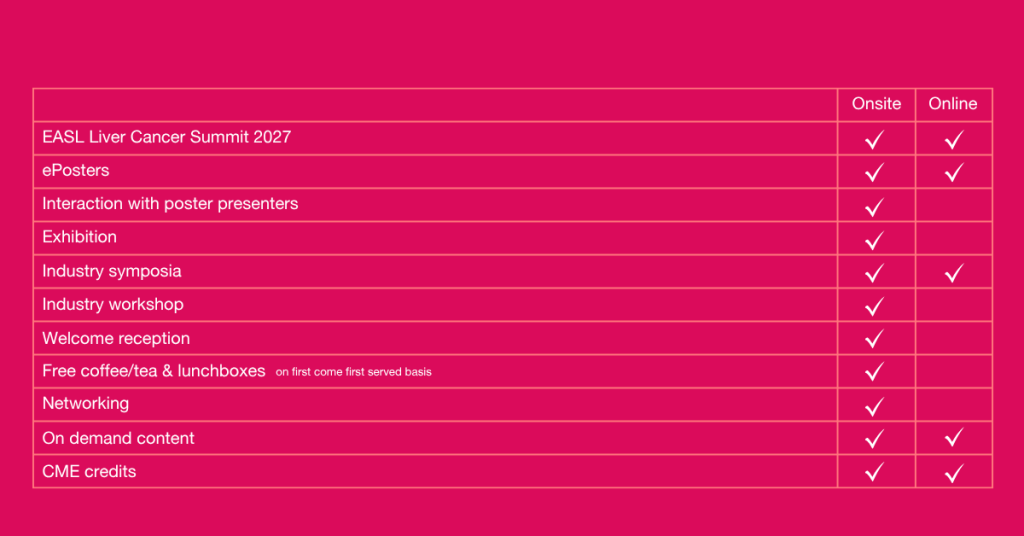
In view of the hardships experienced by the people of Ukraine and in support of its scientific and patient communities, the European Association for the Study of the Liver, EASL, is providing Ukrainian nationals and residents with complimentary online registration for the EASL Liver Cancer Summit 2027.
Please email summit.registration@easloffice.eu to receive instructions regarding the complimentary online registration for the EASL Liver Cancer Summit 2027, attaching a scan of a Ukrainian government-issued passport or a Ukrainian study or residence permit as proof of identity. This offer is valid for all Ukrainian nationals and formerly Ukraine-based residents, regardless of where they are currently residing.
Registration information
Group Registration
Group registrations can be made through the registration platform. For registration queries, please contact us.
Registrations for EASL Members
To benefit from the reduced registration fees for EASL members, your EASL membership must be valid through 16 January 2027, at the time of registration. If you join or renew membership after you have registered for the event, you will not benefit from the member reduced fees. You must be a member at the time of the registration to enjoy reduced-fees benefits.
For any questions regarding your membership please contact EASL’s membership team.
The above conditions are valid for all categories of EASL members.
Registrations for non EASL Members
Become an EASL member and benefit from the reduced registration fees for members!
Please note that if you become an EASL member after you have registered for the event, you will not benefit from the member reduced fees. You must be a member at the time of registration to enjoy reduced-fees benefits.
Besides reduced fees for the EASL Liver Cancer Summit 2027, EASL members have other important benefits:
- Journal of Hepatology (online access)
- Reduced fees to the EASL Congress and other EASL events
- Best education: Schools and Masterclasses
- Best research: Fellowships and Mentorships
- 25% discount off the JHEP Reports open-access publication fees
- Priority access to EASL Congress Meet-the-Experts and Skills Learning Centre sessions.
- Option to apply for EASL Endorsement of events.
- Eligibility for EASL Prizes and Awards
The EASL membership is valid for 12 months, from the day of your payment.
The above conditions are valid for all categories of EASL members.
For any questions regarding your membership please contact EASL’s membership team.
Congrex is the official registration partner for the EASL Liver Cancer Summit 2027. For registration queries, please contact summit.registration@easloffice.eu
Congrex contact details:
EASL Liver Cancer Summit 2027 – Official registration agency
Congrex Switzerland Ltd.
On behalf of EASL
Reinacherstrasse 131, 4053 Basel, Switzerland
T: +41 (0)61 686 77 93
E: summit.registration@easloffice.eu
Italian regulations for pharmaceutical companies:
Any pharmaceutical companies producing drugs in Italy and participating as sponsors or exhibitors at this event must be registered at the Italian Ministry of Health.
Consult the full information on Italian regulations.
Code of conduct:
Please read the EASL code of conduct before registering for this event.
Equity, Diversity, and Inclusion (EDI) Policy Statement:
Please read the EASL EDI Policy Statement.
Important information
Be aware that several fraudulent websites are offering registration, hotel bookings, and other arrangements for the upcoming EASL Liver Cancer Summit 2027.
We strongly recommend you use only the official EASL website for registration. Also, please note, that only Congrex is EASL’s official partner handling registration for EASL Liver Cancer Summit 2027.
EASL Liver Cancer Summit 2026 Scientific Programme
The EASL Liver Cancer Summit 2027 in Valencia will present the latest advances in liver cancer research and clinical care, highlighting innovations across prevention, diagnosis, and treatment.
Day 1 – Understanding the Foundations and Opportunities for Early Intervention
The Summit opens by exploring the changing landscape of liver cancer prevention, early detection, and translational research. Sessions will examine surveillance strategies, novel biomarkers and imaging techniques, and the immune mechanisms that precede malignant transformation. Participants will also gain insights into the latest advances in spatial analysis and innovative preclinical models that are enhancing our understanding of tumour biology and accelerating the development of future therapies.
Day 2 – Advancing Treatment and Translating Evidence into Practice
Day 2 focuses on the multidisciplinary management of primary liver cancers, from early-stage cholangiocarcinoma to the latest advances in systemic, locoregional, and perioperative therapies. Discussions will highlight the growing role of real-world evidence in shaping clinical decision-making and feature cutting-edge research presented during the oral abstract sessions, providing attendees with a comprehensive overview of emerging trends and practice-changing evidence.
Day 3 – Shaping the Future of Liver Cancer Care
The final day looks ahead to the next generation of liver cancer management, exploring precision oncology, cellular therapies, therapeutic vaccines, and liquid biopsy technologies. Sessions will delve into the role of the tumour microenvironment and microbiome, address challenging clinical scenarios and treatment-related toxicities, and tackle the hot topics that continue to influence multidisciplinary care and future directions in hepatobiliary oncology.
Programme overview
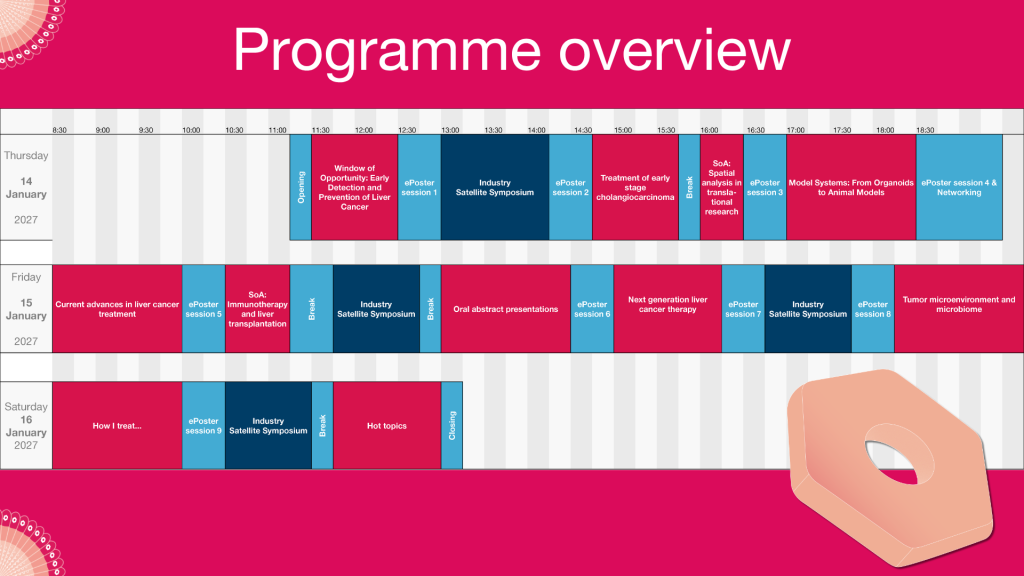
Discover the sessions
Day 1
Session 1: Window of Opportunity: Early Detection and Prevention of Liver Cancer
Liver cancer’s poor prognosis is largely driven by late-stage diagnosis, making early detection and prevention a critical priority. This session addresses the full spectrum of early intervention — from precancerous immune mechanisms and novel imaging strategies to surveillance gaps in the rapidly growing MASLD population — with the goal of identifying where timely action can have the greatest clinical impact.
Discuss: Gaps and future directions in HCC surveillance for patients with MASLD, and how existing strategies must evolve to meet the epidemiological reality.
Explore: How precancerous immunology can inform immune interception strategies before malignant transformation occurs.
Explain: Which current and future biomarkers and imagines techniques facilitate the most accurate diagnosis of primary liver malignancies, and critically appraise their readiness for routine clinical use.
Session 2: Treatment of early stage cholangiocarcinoma
Cholangiocarcinoma presents major surgical and oncological challenges even when detected at an early stage. This session critically examines the boundaries of curative intent, exploring how resectability criteria are defined, how systemic and locoregional therapies can be strategically combined to expand treatment options, and whether liver transplantation may offer a viable path for selected patients.
Describe: The current resectability criteria for biliary tract cancers and the factors that determine surgical candidacy.
Discuss: The rationale and evidence for combining systemic and locoregional approaches in the management of intrahepatic cholangiocarcinoma.
Explore: The expanding indications for liver transplantation in iCCA and the conditions under which it may improve outcomes.
Session 3: State-of-the-Art: Spatial analysis in translational research: Mapping the Malignancy
This lecture explores how spatial transcriptomics and tissue-based spatial analysis are transforming our understanding of the tumor microenvironment in liver malignancies.
Explore: How spatial transcriptomics maps gene expression and cellular interactions within their architectural tissue context, revealing crosstalk between malignant, immune, and stromal cell populations that conventional bulk analyses cannot capture.
Discuss: The implications of spatially resolved tumor microenvironment data for biomarker discovery and patient stratification in liver malignancies.
Describe: How spatial analysis can inform the rational design of novel therapeutic strategies by exposing the functional organization of the tumor ecosystem.
Session 4: Model Systems: From Organoids to Animal Models
Preclinical model systems are indispensable tools for dissecting the biology of liver cancer and bridging the gap between mechanistic insight and clinical translation. This session critically evaluates the current repertoire of available platforms — from patient-derived organoids and microfluidic organ-on-a-chip systems to genetically engineered mouse models and in vivo cholangiocarcinogenesis models — examining where each excels, where it falls short, and how collectively they can best recapitulate the complexity of human liver malignancy.
Describe: The translational accuracy and biological relevance of genetically engineered mouse models as well as organoid systems as models of liver cancer, and their potential to inform therapeutic development.
Discuss: Whether liver-cancer-on-a-chip technology has reached the maturity required for broader adoption in preclinical and translational research.
Recognize: How in vivo modeling of cholangiocarcinogenesis can illuminate the stepwise biological events driving malignant transformation of the biliary epithelium.
Day 2
Session 5: Current advances in liver cancer treatment
This session will highlight recent advances in the multidisciplinary management of primary liver cancers and provide a comprehensive overview of innovations spanning local, perioperative, and systemic treatment approaches for hepatocellular carcinoma (HCC) and biliary tract cancer (BTC).
Describe the evolving role of radiotherapy in the management of liver cancer.
Discuss the rationale and emerging evidence for combining locoregional and systemic therapies, as well as perioperative treatment strategies for HCC and BTC.
Explore the latest advances in systemic therapy for advanced HCC and their implications for optimizing patient outcomes.
Session 6: State-of-the-Art: Immunotherapy and liver transplantation
This state-of-the-art lecture will summarize the current evidence on immunotherapy before and after liver transplantation for hepatocellular carcinoma (HCC).
Review the current evidence on the efficacy and safety of immune checkpoint inhibitors in patients with HCC in the peri-transplant setting
Discuss patient selection, timing, and risk stratification for immunotherapy in the peri-transplant setting
Define unmet clinical needs and future research priorities
Session 7: Oral abstract presentations
This session includes a series of oral presentations covering basic, translational, and clinical research in the field of primary liver cancers. The session is designed to promote knowledge exchange, critical appraisal, and discussion around new findings.
Summarize key findings on latest basic, translational, and clinical research topics.
Critically evaluate the methodologies and implications of presented studies.
Discuss emerging trends and novel concepts introduced during the presentations.
Session 8: Next generation liver cancer therapy
This session will discuss emerging therapeutic strategies that may redefine the future of liver cancer treatment, bringing together advances in molecularly targeted treatments, immunotherapy, cellular therapies, and biomarker development.
Describe the latest advances in precision oncology for biliary tract cancer and their impact on personalized treatment.
Discuss the emerging role of therapeutic vaccines and cell therapies in the treatment of hepatocellular carcinoma.
Explore the potential role of liquid biopsy to improve diagnosis, treatment selection, and disease monitoring in liver cancer.
Session 9: Tumor microenvironment and microbiome
This session will explore the complex interactions between the tumor microenvironment, the immune system, and the gut microbiome in liver cancer. Leading experts will present emerging insights into the biological mechanisms driving therapeutic resistance and discuss novel strategies to improve outcomes for patients with liver cancer.
Describe the role of the tumor microenvironment and its therapeutic targeting in liver cancer.
Discuss the impact of the gut microbiome and molecular predictors on response to immunotherapy.
Explore the contribution of neutrophils to liver cancer progression and their potential as therapeutic targets.
Day 3
Session 10: How I treat…
This session will provide expert perspectives on the management of challenging and uncommon clinical scenarios in liver cancer. Speakers will address both rare tumor subtypes and the management of important comorbidities and treatment-related toxicities.
Describe current approaches to the management of rare hepatobiliary malignancies, including ampullary carcinoma, combined hepatocellular–cholangiocarcinoma, and fibrolamellar carcinoma.
Discuss strategies for optimizing the management of underlying liver conditions, including viral hepatitis and portal hypertension, in patients with liver cancer.
Explore best practices for the recognition and management of severe immune-related adverse events associated with cancer immunotherapy.
Session 11: Hot topics
This session will address timely and evolving topics in liver cancer that continue to shape clinical practice and multidisciplinary decision-making.
Debate the strengths, limitations, and clinical implications of different staging systems for hepatocellular carcinoma.
Discuss strategies for optimizing liver cancer management in resource-sensitive settings and for selecting appropriate patients for radioembolization.
Explore recent evidence and challenges of immunotherapy in the context of liver transplantation.
Welcome to Valencia!
EASL Liver Cancer Summit 2027 will take place in Valencia, Spain at the Palacio de Congresos de Valencia.
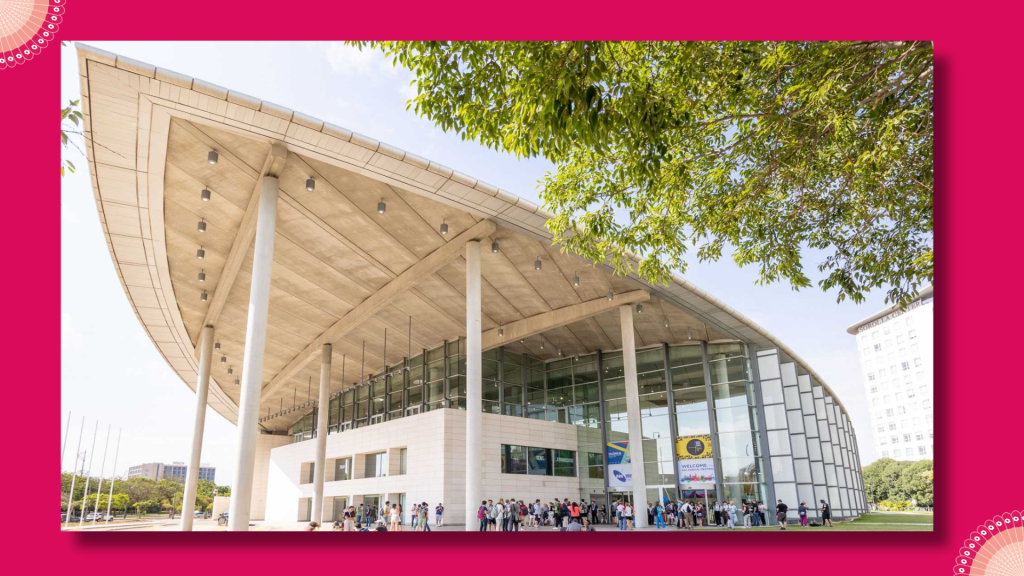
Venue address:
Palacio de Congresos de Valencia
Av. de les Corts Valencianes, 60, Pobles de l’Oest,
46015 València, Spain
How to access the venue?
By public transportation
7 minutes from the Airport and 8 minutes from the city centre and the High Speed Train station.
Excellent underground, taxi, bus, bike and tram connections.
By Bus: Bus lines 62, 63, 99 and N3. More details
By Metro: Beniferri (L1, L2), Palau de Congresos (L4), with connections to the airport and the Joaquín Sorolla train station. More details
By car
The building has a drop-off area for vehicles. It has its own car park which can be accessed from the road Dr. Nicasio Benlloch. It has 12 parking spaces reserved for people with reduced mobility measuring at least 220×450 cm.
Cycling
Cycle path network throughout the city for personal bikes and rented Valenbisi bikes. More details
Mobility
The building has two floors in the south wing and one in the north wing. All floors are connected by a lift and staircases. The ground floor has several ramps which are 300 cm long, over 120 cm wide and have a gradient of 2.6%. No handrails, or tactile or visual signage at the beginning or end of the ramp. On the other floors, routes have no changes of level.
Route free of obstacles, with no overhanging elements. Non-slip, even flooring. There are informative signs in the shape of pictograms with colour contrast. Uniform lighting.
Allows guide dog access.

Accommodation information
A limited number of rooms are available. EASL has negotiated a special rate for conference delegates.
The rates vary according to the type of accommodation requested.
Full payment is required in order to confirm your hotel room(s).
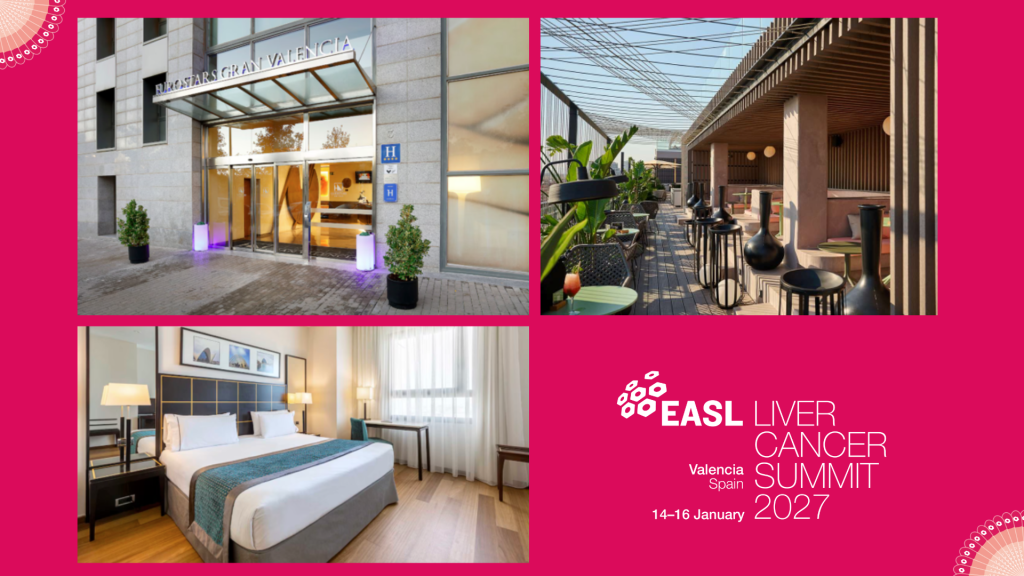
Congrex Switzerland Ltd has been appointed as the EASL official housing agent. Their team of experts have been negotiating on your behalf to offer preferential rates in the most strategic hotels, location and quality wise.
Visit their secured accommodation website to find the up to the minute availability and get access to the best deals! Book early to avoid disappointment.
Alternatively if you have group requirements, their dedicated team would be delighted to work on a personalised proposal for you. Please email them on hotel.easl@congrex.com
How to get a VISA for EASL Liver Cancer Summit 2027

It is recommended to apply as early as possible for a visa as the application process can be time-consuming.
Before applying for your visa, please consult the official website of the Spanish Ministry of Foreign Affairs (who needs a visa, type of visa, etc.).
Visa regulations depend on your nationality and country of origin. In case of visa rejection, EASL cannot be held responsible and therefore cannot refund any registration and accommodation fees.
You are strongly advised to find out if you need a visa to enter Spain as early as possible, and should a visa be required, to apply as soon as possible.
Travelers requiring a visa can travel freely throughout the Schengen zone for three months with a Schengen visa issued by any Schengen country.
To obtain your EASL Liver Cancer Summit invitation letter, you must first finalise and pay your onsite registration and then request your invitation letter. The “Visa invitation letter” button is available on the registration platform.
Getting a visa entitling you to visit one Schengen country, automatically entitles you to travel to and from all the other Schengen countries, too.
EASL applied for CME accreditation of the EASL Liver Cancer Summit 2027.
More information on CME credits will be available soon.
Sponsors & Industry Partners
EASL Liver Cancer Summit 2027 will unite over 600 global experts from more than 50 Countries. A fantastic opportunity to represent your latest products and science, highlighting your role in liver cancer care. Book your exhibition space or sponsored session slot, contact our team to discover available opportunities at Industry@easloffice.eu
Sponsorship deadlines
- Distribution of Industry Prospectus (upon request) – 7 August 2026
- Order deadline for assignment by raking – 11 September 2026
- Opening “first come first served” assignment – 12 September 2026
- Order deadline for exhibition stands – 1 December 2026
Italian regulations for pharmaceutical companies:
Any pharmaceutical companies producing drugs in Italy and participating as sponsors or exhibitors at this event must be registered at the Italian Ministry of Health.
Consult the full information on Italian regulations.
Contact us
EASL Liver Cancer Summit 2027 will provide sponsors and exhibitors unique opportunities to reach the EASL Community worldwide. Contact us to join us on this journey!

Press and Media Guidelines for EASL Liver Cancer Summit 2027
Introduction
The European Association for the Study of the Liver (EASL) welcomes media representatives to cover EASL Liver Cancer Summit 2027. These guidelines outline the rules and requirements for press accreditation, media access, embargo policies, and content usage to ensure fair and responsible reporting.
Press Accreditation and Registration
Eligibility
Accreditation is available to:
Journalists (print, online, and broadcast media) with a verifiable editorial role and a demonstrated focus on liver disease, healthcare, or related medical topics.
Freelance journalists with proof of recent, relevant work in liver disease or healthcare coverage.
Bloggers and influencers with a significant following in medical and scientific fields, particularly in hepatology or related health areas.
Accreditation is not available to:
Industry representatives, PR professionals, or marketing personnel.
Publishers, sales, or advertising personnel.
Representatives of sponsors or exhibitors.
Application Process
Media representatives must apply for press credentials by submitting:
A valid press card (or letter of assignment from an editor).
Please note that business cards or membership cards are not accepted as credentials.
AND
For print journalists: Two recent bylined medical/science articles.
For broadcast journalists: Links to two broadcast programmes you have worked on with your name mentioned, or a piece to camera.
For bloggers*, links to two relevant blog posts. * This category will be marked on the quality and relevance of links provided. Being published on a blog does not automatically grant media accreditation.
EASL reserves the right to approve or deny applications at its discretion.
Press Registration
Press registration is free and includes the following services:
Access to all scientific sessions;
Access to press releases (if available);
Interviews arranged with EASL spokespersons upon request.
EASL Liver Cancer Summit 2027 Embargo Policy
By submitting an abstract to the EASL Liver Cancer Summit 2027, you agree to abide by this embargo policy. The policy states that authors, presenters and/or their sponsors may not share data or key results from the abstract in any form (print, broadcast or online publication, media release or conference presentation) until this embargo is lifted. Authors, presenters and/or their sponsors may, however, publicise the fact that their abstract has been selected for inclusion in the summit programme before the abstract is officially released. In this context, they may publish the title of their abstract together with the names of the authors and institutions.
All abstracts are under embargo until the publication of the abstract book, which will be released two weeks prior to the EASL Liver Cancer Summit, 5 January 2027.
Please direct any questions or concerns about the EASL Liver Cancer Summit embargo policy for authors and presenters to the EASL Liver Cancer Summit team at abstracts@easloffice.eu
Photography, Video, and Audio Recording
General Rules
- Photography, video, and audio recordings are strictly forbidden during scientific sessions; in the exhibition area; and poster area, unless authorised by EASL.
- Scientific slides, session recordings, and speaker presentations are copyrighted materials and cannot be reproduced without the author’s written consent.
- EASL will provide official images and footage for media use.
- EASL reserves the right to revoke media access for any unauthorised use of content.
Special Permissions
- Media representatives wishing to conduct interviews must obtain prior approval from the EASL Press Office.
- Recorded content must credit EASL Liver Cancer Summit 2027 and cannot be used for commercial purposes.
Social Media Policy
EASL encourages live coverage of the summit via social media while respecting embargo policies and privacy rights.
Allowed:
- Posting summaries, quotes, and non-embargoed content.
- Sharing EASL official social media updates.
Not Allowed:
- Live streaming or real-time broadcasting of sessions.
- Posting embargoed content before the embargo lift.
- Sharing confidential or unpublished research data.
Industry and Third-Party Media Activities
Sponsored Press Conferences
- Third parties (e.g., industry sponsors, exhibitors) must request approval from EASL for any press conference or media event.
- These events cannot be scheduled during official summit scientific sessions.
Use of EASL Branding
- EASL logos and trademarks cannot be used in third-party materials without prior written permission.
Consequences of Policy Violations
Violation of EASL’s press and media policies may result in:
- Immediate revocation of press credentials.
- Exclusion from the EASL Liver Cancer Summit and future events.
- Public disclosure of embargo breaches.
Contact Information
For press enquiries contact: EASL Press Office
Email: press@easloffice.eu
EASL looks forward to welcoming media professionals to EASL Liver Cancer Summit 2027 and appreciates their cooperation in maintaining ethical reporting standards.
FAQ
Click on the topics below to learn more.
Access Badges
Access to all scientific events will only be possible with your personal name badge. All participants are requested to wear their name badges throughout the summit.
EUR 50.00 (incl. VAT) will be charged for replacing a lost badge, and for re-printing due to incorrect submission of names and/or company names or addresses.
Catering
Coffee breaks and lunch are provided on a first-come, first-served basis.
Cloakroom
The cloakroom is located next to the registration desk on the ground level and will be operating during the summit opening hours.
CME Certificates
EASL has applied for CME accreditation for the EASL Liver Cancer Summit 2027. More information on CME credits will be available soon.
Currency
The official currency in the Spain is Euro (EUR). All major credit cards are accepted in most hotels, restaurants, and shops.
Event App
The event app will be available for download on 7 January.
Language
The official language of the EASL Liver Cancer Summit is English.
Registration Desk
The registration desk is located at the Entrance on the ground level.
- Thursday, 14 January 10:00–19:00
- Friday, 15 January 08:00–19:00
- Saturday, 16 January 08:00–13:00
Speaker Service Centre
The Speaker Service Centre is located in the VIP room on the ground level.
- Thursday, 14 January 10:00–19:00
- Friday, 15 January 08:00–19:30
- Saturday, 16 January 08:00–13:00
Taxi
- Radio Taxi Manises: (+34) 961 521 155
- Radio Taxi Valencia: (+34) 963 703 333
- Taxis de Valencia: (+34) 961 119 977
- Taxi Valencia: (+34) 644 015 655
- Taxco: (+34) 902 024 972
More details for airport taxi, please click here
Venue
The EASL Liver Cancer Summit 2027 will take place in Valencia, Spain, at the Valencia Conference Centre.
Valencia Conference Centre
Avenida Cortes Valencianas, 60
46015 Valencia, Spain
Visa
Please find further information here.
Weather
January is among the coldest months, with average temperatures around 17–18 °C (63–64 °F) during the day and 7–9 °C (45–48 °F) at night.
WiFi
Free WiFi will be available for participants.
Contact us
If you have any questions please contact: easlsummit@easloffice.eu
If you have questions regarding registration please contact: summit.registration@easloffice.eu
For any other questions:
- Abstracts: abstracts@easloffice.eu
- Invited Faculty: faculty@easloffice.eu
- General: easlsummit@easloffice.eu
- Industry: industry@easloffice.eu
- Membership: membership@easloffice.eu
- Delegates: summit.registration@easloffice.eu
- Hotels: hotel.easl@congrex.com