
Home of Hepatology7 rue Daubin1203 GenevaSwitzerland+41 22 807 03 60easloffice@easloffice.eu© 2025 EASL. All rights reserved.Website by Soto.Privacy Policy | Cookie Policy | Terms & Conditions | Cyber Security Explore offerUnlock the full potential of being part of the EASLcommunity. As a member, you’ll gain access toexclusive resources, reduced event fees, top-tierjournals, and professional development opportunitiesdesigned to support your career in hepatologyBecome a memberNurses & Allied Health ProfessionalsLink titleYoung InvestigatorsLink titleBasic ScienceLink titleTitle here Lorem ipsum At the heart of EASL is a diverse and dynamic international community of professionals dedicated to advancing hepatology.Discover how you can get involved and make an impact.Whether you're a member, a Young Investigator, a nurse or allied health professional, or focused on basic science, there's a place for you here. Explore the different pathways to connect, grow and contribute, from membership benefits to tailored programmes and scientific networksLorem ipsum dolor sit ipsum CommunitySign In / Sign UpResourcesWhat We DoAbout Us Partnerships

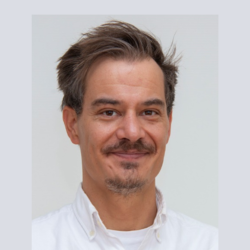
Kristof Van Avondt

Kristof Van Avondt (PhD) is team lead of the Spatial Omics Accelerator and assistant professor at the University Medical Center Utrecht, The Netherlands.

He received his PhD from the Utrecht University on the topic of neutrophil immune regulation. As a postdoc, he continued studying neutrophil function and its implications in various diseases. First in sickle cell disease at Sanquin Research Amsterdam, The Netherlands, later in aging and cardiovascular disease at LMU Munich, Germany, and at WWU Münster, Germany.

Ever since, he has been interested in the spatial organization of neutrophils and other cell types and their implications in health and disease. In his role within the Spatial Omics Accelerator, he oversees the integration of advanced spatial technologies to analyse biological molecules within their tissue context, providing researchers with detailed insights into cellular organization and function. Under his guidance, the accelerator aims to drive innovation and contribute to the development of spatial omics methodologies.

Scroll to Top

Search EASL