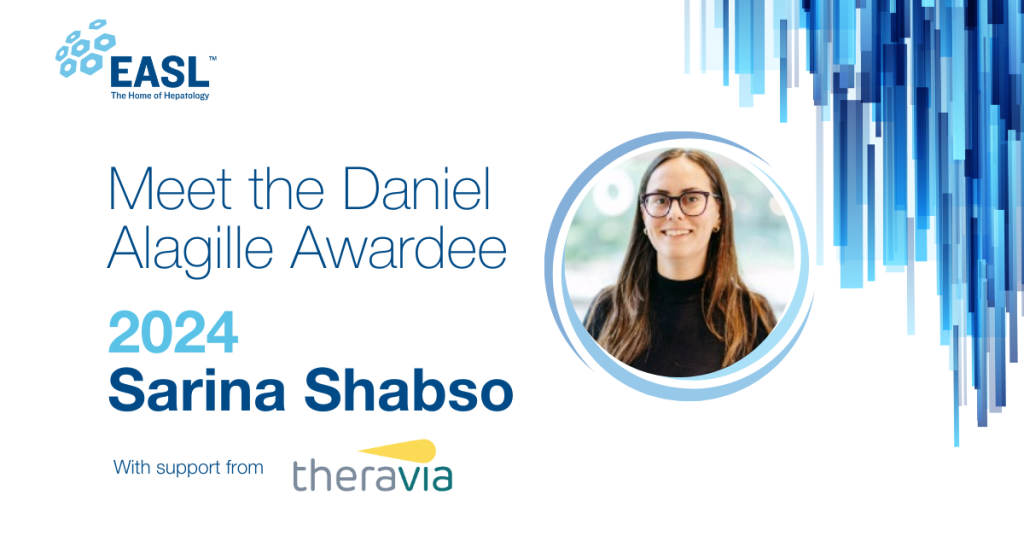
The recipient of the 2024 Daniel Alagille Award, Sarina Shabso, discusses her inspiring journey into the field of hepatology. Shabso’s path, from her early focus on skin regeneration to her groundbreaking research on genetic cholestatic diseases, showcases her dedication and innovative spirit, which have significantly advanced our understanding of liver diseases.
What is your background, and what inspired you to pursue a career in hepatology, specifically focusing on genetic cholestatic diseases?
During my PhD, I worked on skin regeneration, focusing on the hair follicle. Transitioning to my postdoc, my interest in regeneration and stem cell biology led me to study the liver, known as the most regenerative organ in the human body. I was fascinated by the liver’s regenerative capabilities and the mechanisms it activates during injury and disease. This fascination inspired me to pursue a career in hepatology, specifically focusing on genetic cholestatic diseases. Currently, I use human liver organoids to model regeneration, plasticity, and genetic liver diseases, aiming to advance our understanding and treatment of these conditions.
Can you describe the research project that earned you the Daniel Alagille Award?
My research project focuses on Progressive Familial Intrahepatic Cholestasis (PFIC), a group of rare genetic diseases leading to cholestatic liver disease, primarily in infants. These rare diseases often do not receive as much attention as more common ones, resulting in a lack of appropriate models and drug development. In our project, we address this gap by building an organoid biobank representing all the different PFIC subtypes. Using this novel research platform, we aim to understand the mechanisms behind PFIC development and provide new therapeutic opportunities.
What are the key goals and potential impacts of your research project, and how does it aim to benefit patients living with genetic cholestatic diseases?
The key goal of my research project is to build a PFIC biobank that includes all the different subtypes of the disease. As new mutations are identified and linked to PFIC, we use organoid technology to rapidly generate new in-vitro models for these subtypes. This continuously updated biobank serves multiple purposes: it allows us to study the disease mechanisms of PFIC in detail and provides a platform for drug development. The potential impact of this research is significant. By understanding the underlying mechanisms of PFIC and developing targeted therapies, we aim to improve the diagnosis, treatment, and quality of life for patients living with genetic cholestatic diseases. This research has the potential to lead to breakthroughs in personalized medicine, offering hope and better outcomes for those affected by these rare conditions.
What are the significant findings or breakthroughs you have achieved so far in your project, and what are the next steps?
So far, one of the significant breakthroughs in our project has been the successful use of genetically editable human liver organoids. By employing next-generation CRISPR-Cas9 tools, we have been able to precisely introduce mutations to mimic those found in patients. This advancement has allowed us to build a biobank containing various mutant liver organoids. The next steps in our project involve the detailed characterization of these mutants to understand their behavior and disease mechanisms. Following this, we will conduct drug screening to identify potential therapeutic candidates. These steps are crucial for advancing our understanding of liver diseases and developing effective treatments.
How has receiving the Daniel Alagille Award impacted your professional development and career trajectory?
Receiving the Daniel Alagille Award has had a significant impact on my professional development and career trajectory. It has not only boosted my motivation and commitment to my research but also provided me with valuable recognition within the scientific community. This award has opened up new opportunities for collaboration and networking, allowing me to connect with leading experts in the field. Additionally, the financial support has enabled me to further my research, particularly in developing and characterising genetically edited human liver organoids. Overall, the award has accelerated my career progression and inspired me to continue pursuing innovative solutions in liver disease research.
What keeps you motivated and passionate about your work?
What keeps me motivated and passionate about my work is the opportunity to learn something new every day and advance scientific knowledge. The prospect of making discoveries that can eventually benefit patients is incredibly inspiring. Knowing that my research can contribute to improving treatments and outcomes for those suffering from liver diseases drives me to continue exploring and innovating in this field.
What advice would you share with scientists and researchers aspiring to make significant contributions in the field and thinking about applying for the award next year?
My advice is to never give up and always believe in yourself. Be bold in asking different scientific questions and pursue your ideas with determination. Also, don’t hesitate to seek guidance and collaborate with others in your field. If you’re thinking about applying for the award next year, go for it. Your passion and persistence can make a substantial impact.
How important do you think it is for young investigators to engage with organisations like EASL, and what benefits have you experienced from your personal involvement with EASL?
The scientific community plays a major role in shaping the career path of researchers by offering invaluable opportunities for interaction with scientists, clinicians, and patients—potential future collaborators who can provide valuable insights and feedback. Personally, my involvement with EASL began at the 2024 congress in Milan. There, I was introduced to a large and diverse community and had the opportunity to learn about cutting-edge science in the liver field, which was incredibly inspiring. This experience highlighted the importance of being part of such a dynamic and supportive network.
About Sarina Shabso
Sarina is a postdoctoral researcher at the Hubrecht Institute in the Netherlands. She studies liver regeneration and disease using organoid models and CRISPR tools.
About the Daniel Alagille Award
The Daniel Alagille Award, named after the renowned French pediatric hepatologist Prof. Daniel Alagille (1925–2005), honors his significant contributions to the field of hepatology, particularly in pediatric medicine. Prof. Alagille is best known for identifying and naming Alagille Syndrome and for his influential work that shaped the subspecialty he pioneered. The award aims to support promising young scientists dedicated to advancing research in genetic cholestatic diseases. Recipients are provided with EUR 25,000 in funding for their research over up to two years, along with a bursary to attend the EASL Congress to present their findings. This award not only acknowledges exceptional talent but also encourages the next generation of researchers to continue building on Prof. Alagille’s legacy, fostering innovation and excellence in hepatology.