
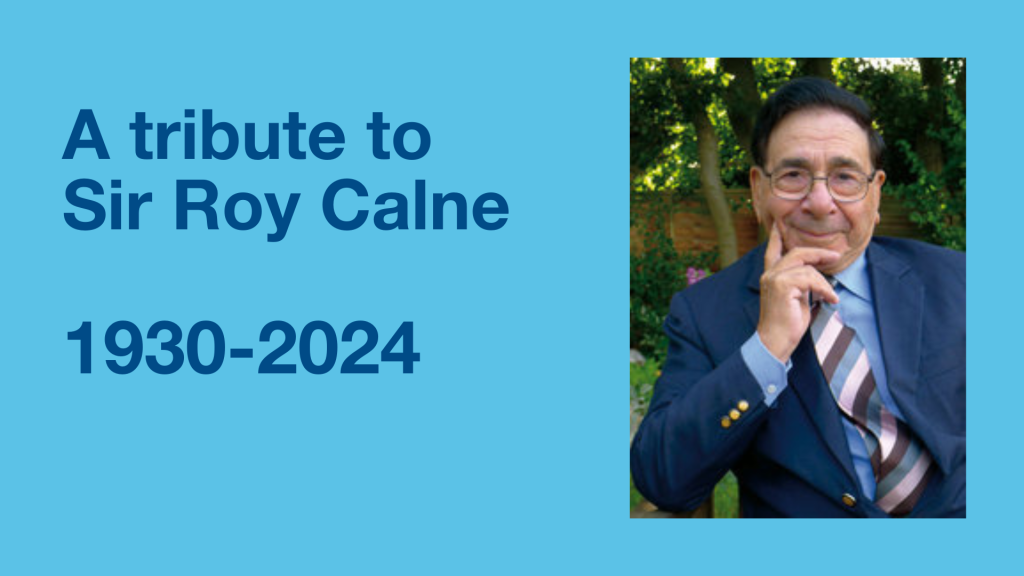
It is with deep sorrow that EASL announces the passing of Sir Roy Calne, a pioneer in the field of transplantation. Sir Calne, a distinguished professor of surgery at Cambridge University, passed away at the age of 93. His remarkable contributions to transplant surgery and immunosuppressant drugs have left an indelible mark on the hepatology community, and the world of medicine.
During the 1960s, Sir Roy Calne embarked on a journey to advance the science of transplantation, driven by a deep commitment to saving lives affected by kidney and liver failure. His groundbreaking achievements included performing the first liver transplant in Europe in 1968, orchestrating the world’s first liver, heart, and lung transplant in 1986, and successfully conducting the world’s inaugural “organ cluster” transplant in 1994, which included the stomach, intestine, pancreas, liver, and kidney. However, his most significant contribution was the development of immunosuppressive drugs, such as cyclosporine, which revolutionised the field by significantly reducing the risk of organ rejection and increasing survival rates following transplants.
Sir Calne’s relentless pursuit of improving transplant outcomes began as a young medical student when he questioned the limitations of organ transplantation due to immune system rejection. Over the years, he collaborated with leading scientists and surgeons, and his work ultimately led to substantial advancements in transplant medicine. Calne was elected FRS in 1974, knighted for services to transplant medicine in 1986 and in 2014 won the Pride of Britain lifetime achievement award.
Sir Roy Calne has paved the way for countless lives to be saved through organ transplantation, and his legacy will continue to inspire future generations of medical professionals. EASL mourns the loss of a true visionary and extends its condolences to Sir Calne’s family and colleagues during this difficult time.