
The EASL Steatotic Liver Disease Summit 2027 comprises two complementary parts.
Part 1: EASL MASH Innovation and Implementation Roadmap (10 February) brings together stakeholders to define implementation priorities and regulatory perspectives for MASH care across Europe.
Part 2: Main Steatotic Liver Disease Summit Programme (11–13 February) is a three-day translational meeting that follows steatotic liver disease across its full continuum — from population policy to the patient in clinic, and from tissue microenvironment to the single stressed hepatocyte and its organelles.
Across ten thematic sessions, three State-of-the-Art lectures, a dedicated best-abstract session, and eight ePoster sessions, the programme deliberately refuses to separate “basic” from “clinical.” The same disease spectrum — MASLD, MetALD and ALD — is interrogated at every scale by epidemiologists, hepatologists, pathologists, and cell and mechano-biologists.
The premise is that SLD is now a public-health problem with unresolved mechanistic and methodological foundations. The Summit therefore pairs the field’s most pressing questions (Has renaming the disease changed anything? Can a liver stiffness score predict outcomes? Can we still justify placebo arms?) with the biological and mechanistic insights that will shape future answers. Designed for all stakeholders in the SLD community, the Summit provides a comprehensive update on the latest evidence, emerging data, and key developments across the field.
Scope
The Summit covers steatotic liver disease across the entire metabolic–alcohol spectrum, spanning epidemiology and health policy, stigma and the patient voice, nutrition across the life course, diagnostics (histology, digital/AI pathology, elastography, fibrosis biomarkers), the cellular and microenvironmental mechanisms of progression, advanced/decompensated disease, clinical-trial methodology, and current and emerging therapeutics.
Learning Objectives
On completion, participants should be able to:
- Appraise the practical impact of the WHO resolution and the SLD nomenclature change on health systems, stigma and case-finding across specialties.
- Integrate multidisciplinary management of patients with SLD.
- Integrate nutritional assessment and intervention into SLD care across subtypes and generations, including AUD and adolescent populations.
- Critically evaluate diagnostic tools — biopsy, AI-assisted histology, 3D tissue mapping, vibration-controlled and shear-wave elastography, and serum fibrosis markers — for their real prognostic and monitoring value.
- Differentiate the cellular and microenvironmental mechanisms (macrophage niches, matrix stiffness, organelle crosstalk, hepatocyte heterogeneity, mitochondrial signaling) that drive SLD progression.
- Apply current management principles for advanced SLD, including portal hypertension, prevention of decompensation and re-compensation, and the role of bariatric surgery.
Analyse the methodological challenges of MASH trials — placebo arms, screen failure, non-response — and interpret responder definitions. - Summarise approved and pipeline therapies for MASH and ALD, and the complex problem of treating MetALD.
Top reasons to attend
- To receive a comprehensive update on the latest scientific, clinical, and translational developments in Steatotic Liver Disease, including MASLD, MetALD, and ALD.
- To engage in thought-provoking discussions with international experts on the evolving landscape of SLD—from public health to precision diagnostics and emerging therapies.
- To present your research, gain valuable feedback, and connect with peers and mentors who can inspire your next career steps.
- To meet and learn from Key Opinion Leaders shaping the future of SLD research, clinical care, and policy worldwide.

EASL MASH Innovation and Implementation Roadmap - Background
The management of metabolic dysfunction-associated steatohepatitis (MASH) is entering a new era. Recent approval of two anti-MASH therapies has fundamentally changed the clinical landscape after decades during which only lifestyle intervention was available.
However, this achievement creates novel clinical challenges: who should be treated, when treatment should begin, how to monitor therapeutic response, and how to integrate therapies effectively into healthcare systems. The World Health Organization’s recent decision to recognise Steatotic Liver Disease (SLD) as a component of the global non-communicable disease agenda represents a historic opportunity to position liver health within integrated metabolic strategies.
Europe faces a major implementation gap despite these scientific advances. Innovative therapies alone will not improve patient outcomes unless healthcare systems can identify eligible patients, provide equitable access, and ensure sustainable reimbursement. Fragmented patient pathways, heterogeneous screening strategies, limited multidisciplinary awareness, uncertainty regarding non-invasive testing, and misalignment between regulatory approval and national payer expectations all represent substantial barriers.
MASH is closely linked with obesity, type 2 diabetes, cardiovascular disease and chronic kidney disease. Successful implementation therefore requires multidisciplinary collaboration beyond hepatology, involving diabetologists, obesity specialists, primary care physicians, cardiologists, nephrologists, public health experts and patient organisations.
To address these challenges, EASL proposes the EASL MASH Innovation and Implementation Roadmap, a long-term, multi-stakeholder initiative designed to bridge the gap between scientific innovation and real-world patient access across Europe. This platform will bring together all stakeholders in the MASH ecosystem through structured dialogue and consensus building to identify evidence gaps, define implementation priorities, and develop practical recommendations facilitating equitable and sustainable access to MASH care throughout Europe.
Welcome message
For most of its history, fatty liver disease was the quiet diagnosis — incidental, under-named, and easy to look past. That era is over. Steatotic liver disease is now the most common chronic liver disease in the world, the subject of a WHO resolution, a renamed condition, and a therapeutic pipeline that has finally started to deliver. With recognition, however, novel clinical challenges arise.
This EASL Steatotic Liver Disease Summit 2027 addresses them through two integrated programmes. We begin with the EASL MASH Innovation and Implementation Roadmap (10-11 February), a dedicated stakeholder initiative focused on translating innovation into equitable patient access across European healthcare systems. This is followed by our three-day main Summit (11–13 February), which aims to generate high-level interaction between experts in the field and move beyond established consensus.
Over these days we will unravel the entire arc of the disease: from the public-health burden and the stigma still carried by patients, through nutrition, diagnostics and clinical-trial design, into the microenvironment, the hepatocyte and its organelles — and back out again to the bedside with a glimpse toward future therapies that will define the next decade. We have deliberately seated the epidemiologist next to the mechanobiologist, the clinical trialist next to the cell biologist, because the most useful answers in this field tend to appear at exactly those intersections.
You will be asked to disagree. Several sessions pose questions we cannot yet answer clearly — whether a change in stiffness truly means a change in disease, whether placebo arms remain defensible, whether we can treat MetALD before we can define it. Bring your data, as well as your scepticism and passion for SLD. We are looking forward to having you at the EASL Steatotic Liver Disease Summit 2027!
EASL MASH Innovation and Implementation Roadmap - Organising Committee


EASL Steatotic Liver Disease Summit 2027 - Organising Committee


Abstract submission
Abstracts can be submitted in any of these categories:
- Clinical Science
- Basic and Translational Science
- Nurses and Allied Health Professionals
- Public health
Key deadlines:
- Abstract submission deadline is 17 November 2026, at 23:59 CET.
- Abstract presenters will be notified by 22 December 2026.
Trainees & Postdocs bursary
Trainees and postdocs are eligible to receive a bursary to attend the EASL Steatotic Liver Disease Summit 2027.
Presenters must be EASL members to apply for bursaries.
Types of bursaries
| Full Bursaries for Trainees & Postdocs | Registration Bursaries for Trainees & Postdocs |
|
|
Embargo policy
All abstracts are under embargo until the publication of the abstract book, which will be released two weeks prior to the Summit, on 27 January 2027.
Types of presentations
Accepted abstracts will be presented in one of the following formats:
- Oral presentation
- Poster Tour presentation
- ePoster
Presenters will be contacted by e-mail with instructions to prepare and upload their presentations.
Oral presentation
PowerPoint presentations can be uploaded 3 weeks before the event on the summit platform. Only 16:9 landscape MS-PowerPoint presentations are permitted.
About the oral presentation:
- Presentations will last 10 min followed by 5 min of Q&A.
- Personal laptops cannot be connected in the lecture hall.
- You may make changes to your presentation in the summit platform at any time until 3 hours before the start of the session.
- Onsite, you may make changes to your presentation in the Speaker Service Centre at least 3 hours before the start of the session. Our staff will review your presentation with you and assist with uploading it to the system.
Poster presentation
If your abstract is accepted as a poster, you must submit a poster for the platform. Accepted posters will be presented in one of two formats: ePoster or Poster Tour. Presenters will be notified by email regarding the assigned format. All posters must be submitted using one of the provided ePoster templates or adhere to the specified dimensions.
ePoster presentation
ePosters will be displayed on a dedicated screen during a 30 min ePoster session.You may use the official template or your own, provided that it follows the required dimensions. Poster dimensions are 140 cm wide x 90 cm high.
Poster Tour presentation
The Poster Tour presentation consists of a 4-slide Power Point 16:9 (1 cover slide + 3 slides detailing your abstract). Presenters will have a few minutes to deliver their presentation followed by a Q&A session. Further details will be communicated via email.
EASL SLD Summit 2025 registration fees
EASL members are eligible for reduced registration fees. If you are not a member yet, you can become an EASL member now.
Please note that:
- Registration fees for onsite will be shown excluding the 19% German VAT.
- Registration fees for online will be shown excluding the VAT. For EU zone, VAT will be calculated and applied at the time of registration, in accordance with the participant’s country of residence, and client’s profile (B2B or B2C) as required by EU VAT regulations for digital services.
- Your registration includes access to both the EASL MASH Innovation and Implementation and the EASL Steatotic Liver Disease Summit.
Onsite fees
Registration fees for EASL Members
Onsite Registrations VAT
- Registration fees for onsite participants, excluding 19% German VAT.
- The registration excludes 3% credit card fees.
Your onsite registration also includes access to the online platform.
| Early fees (until 18 November 2026) | Standard fees (until 9 February 2027) | Live fees (from 10 February 2027) | |
| Delegate – EASL Member | EUR 407 | EUR 605 | EUR 715 |
| Trainees & Postdocs, Nurses, Allied Health Professionals, Patients – EASL Member | EUR 110 | EUR 187 | EUR 220 |
| Delegate, from low-income economies* – EASL Member | EUR 50 | EUR 75 | EUR 100 |
| Trainees & Postdocs, from low-income and lower-middle income economies* – EASL Member | EUR 50 | EUR 75 | EUR 100 |
Registration fees for non EASL members
Not an EASL Member? Become one today and save up to EUR 250 on your EASL SLD Summit 2025 registration.
Please note that the fees below include 23% Portuguese VAT. Your onsite registration also includes access to the online platform.
| Early fees (until 31 October 2024) | Standard fees (until 22 January 2025) | Last minute fees (from 23 January 2025) | |
| Delegate | EUR 771 | EUR 947 | EUR 1,082 |
| Trainees & Postdocs, Nurses, Allied Health Professionals, Patients | EUR 162 | EUR 311 | EUR 406 |
| Delegate, from low-income economies* | EUR 80 | EUR 105 | EUR 148 |
| Trainees & Postdocs, from low-income and lower-middle income economies* | EUR 80 | EUR 105 | EUR 148 |
Onsite fees
Registration fees for EASL Members
Onsite Registrations VAT
- Registration fees for onsite participants, excluding 19% German VAT.
- The registration excludes 3% credit card fees.
Your onsite registration also includes access to the online platform.
| Early fees (until 18 November 2026) | Standard fees (until 9 February 2027) | Live fees (from 10 February 2027) | |
| Delegate – EASL Member | EUR 407 | EUR 605 | EUR 715 |
| Trainees & Postdocs, Nurses, Allied Health Professionals, Patients – EASL Member | EUR 110 | EUR 187 | EUR 220 |
| Delegate, from low-income economies* – EASL Member | EUR 50 | EUR 75 | EUR 100 |
| Trainees & Postdocs, from low-income and lower-middle income economies* – EASL Member | EUR 50 | EUR 75 | EUR 100 |
Registration fees for non EASL members
Not an EASL Member? Become one today and save up to EUR 279 on your EASL Steatotic Liver Disease Summit 2027 registration.
Onsite Registrations VAT
- Registration fees for onsite participants, excluding 19% German VAT.
- The registration excludes 3% credit card fees.
Your onsite registration also includes access to the online platform.
| Early fees (until 18 November 2026) | Standard fees (until 9 February 2027) | Live fees (from 10 February 2027) | |
| Delegate | EUR 627 | EUR 770 | EUR 880 |
| Trainees & Postdocs, Nurses, Allied Health Professionals, Patients | EUR 132 | EUR 253 | EUR 330 |
| Delegate, from low-income economies* | EUR 65 | EUR 85 | EUR 120 |
| Trainees & Postdocs, from low-income and lower-middle income economies* | EUR 65 | EUR 85 | EUR 120 |
Online fees
Registration fees for EASL Members
Online Registrations VAT
- Registration fees for online will be shown excluding the VAT of host country. For EU zone, VAT will be calculated and applied at the time of registration, in accordance with the participant’s country of residence, as required by EU VAT regulations for digital services.
- The registration excludes 3% credit card fees.
| Early fees (until 18 November 2026) | Standard fees (until 9 February 2027) | Live fees (from 10 February 2027) | |
| Delegate – EASL Member | EUR 407 | EUR 605 | EUR 715 |
| Trainees & Postdocs, Nurses, Allied Health Professionals, Patients – EASL Member | EUR 110 | EUR 187 | EUR 220 |
| Delegate, from low-income economies* – EASL Member | EUR 50 | EUR 75 | EUR 100 |
| Trainees & Postdocs, from low-income and lower-middle income economies* – EASL Member | EUR 50 | EUR 75 | EUR 100 |
Registration fees for non EASL members
Online Registrations VAT
- Registration fees for online will be shown excluding the VAT of host country. For EU zone, VAT will be calculated and applied at the time of registration, in accordance with the participant’s country of residence, as required by EU VAT regulations for digital services.
- The registration excludes 3% credit card fees.
Not an EASL Member? Become one today and save up to EUR 220 on your EASL Steatotic Liver Disease Summit 2027 registration.
| Early fees (until 18 November 2026) | Standard fees (until 9 February 2027) | Live fees (from 10 February 2027) | |
| Delegate | EUR 627 | EUR 770 | EUR 880 |
| Trainees & Postdocs, Nurses, Allied Health Professionals, Patients | EUR 132 | EUR 253 | EUR 330 |
| Delegate, from low-income economies* | EUR 65 | EUR 85 | EUR 120 |
| Trainees & Postdocs, from low-income and lower-middle income economies* | EUR 65 | EUR 85 | EUR 120 |
*Low income economies: Please check the World Bank classification to see if your country belongs to this category
**Lower-middle income economies: Please check the World Bank classification to see if your country belongs to this category
Your EASL Steatotic Liver Disease Summit 2027 registration includes exclusive access to the full on-demand content during and after the event.
Proof of status:
- The Trainees & Postdocs registration fee is applicable for individuals up to 35 years old; as well as for individuals up to 40 years who are still in training (Masters, PhD, and Postdocs, and residents in training) at the time of the Summit. Proof of age or a certificate from the supervisor or head of department must be forwarded together with the registration.
- Delegates from countries defined as low-income economies or lower-middle income economies: proof of residence or letter from employer.
- Nurses: proof of your status as a nurse.
- AHPs: a certificate confirming your profession as an AHP. Please see this non-exhaustive list of AHP professions.
Payment is possible by credit card in Euros: Eurocard/MasterCard, Visa, and American Express are accepted. Please note that the merchant name appearing on your credit card statement will be “Congrex Switzerland Ltd.”. Per booking, a handling fee of 3% applies.
Payment by bank transfer is possible until Monday, 11 January 2027.
Onsite vs Online
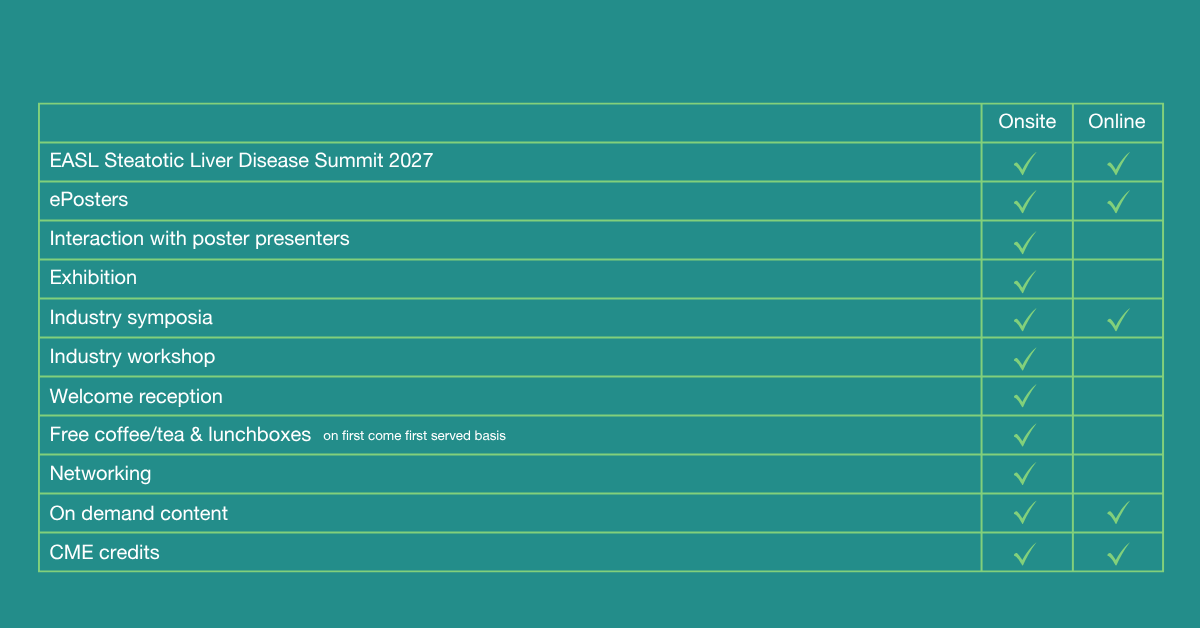
In view of the hardships experienced by the people of Ukraine and in support of its scientific and patient communities, the European Association for the Study of the Liver, EASL, is providing Ukrainian nationals and residents with complimentary online registration for the EASL Steatotic Liver Disease Summit 2027.
Please email summit.registration@easloffice.eu to receive instructions regarding the complimentary online registration for the EASL Steatotic Liver Disease Summit 2027, attaching a scan of a Ukrainian government-issued passport or a Ukrainian study or residence permit as proof of identity. This offer is valid for all Ukrainian nationals and formerly Ukraine-based residents, regardless of where they are currently residing.
Registration information
Group registration
Group registrations can be made through the registration platform. For registration queries, please contact us.
Registrations for EASL members
To benefit from the reduced registration fees for EASL members, your EASL membership must be valid through 13 February 2027, at the time of registration. If you join or renew membership after you have registered for the event, you will not benefit of the member reduced fees. You must be a member at the time of the registration to enjoy reduced-fees benefits.
For any questions regarding your membership please contact EASL’s membership department
The above conditions are valid for all categories of EASL members.
Registrations for non-EASL members
Become an EASL member and benefit from the reduced registration fees for members!
Please note that if you become an EASL member after you have registered for the event, you will not benefit of the member reduced fees. You must be a member at the time of registration to enjoy reduced-fees benefits.
Besides reduced fees for the EASL Steatotic Liver Disease Summit 2027, EASL members have other important benefits:
- Journal of Hepatology (online access)
- Reduced fees to the EASL Congress and other EASL events
- Best education: Schools and Masterclasses
- Best research: Fellowships and Mentorships
- 25% discount off the JHEP Reports open-access publication fees
- Priority access to EASL Congress Meet-the-Experts and Skills Learning Centre sessions.
- Option to apply for EASL Endorsement of events.
- Eligibility for EASL Prizes and Awards
The EASL membership is valid for 12 months, from the day of your payment.
The above conditions are valid for all categories of EASL members.
For any questions regarding your membership please contact EASL’s membership department
Congrex is the official registration partner for the EASL Steatotic Liver Disease Summit 2027. For registration queries, please contact summit.registration@easloffice.eu
Congrex contact details:
EASL Steatotic Liver Disease Summit 2027 – Official registration agency
Congrex Switzerland Ltd.
On behalf of EASL
Reinacherstrasse 131, 4053 Basel, Switzerland
T: +41 (0)61 686 77 93
E: summit.registration@easloffice.eu
Italian regulations for pharmaceutical companies:
Any pharmaceutical companies producing drugs in Italy and participating as sponsors or exhibitors at this event must be registered at the Italian Ministry of Health.
Consult the full information on Italian regulations.
Code of conduct:
Please read the EASL code of conduct before registering for this event.
Equity, Diversity, and Inclusion (EDI) Policy Statement:
Please read the EASL EDI Policy Statement.
EASL Steatotic Liver Disease Summit 2027 Scientific Programme
The EASL Steatotic Liver Disease Summit 2027 comprises two parts:
Part 1: EASL MASH Innovation and Implementation Roadmap (10–11 February)
A dedicated stakeholder initiative bringing together clinicians, healthcare professionals, researchers, regulators, payers, policymakers, industry representatives, and patient advocates to identify priority implementation challenges and build consensus on translating innovation into equitable patient access across European healthcare systems.
Part 2: Main Steatotic Liver Disease Summit Programme (11–13 February)
Ten thematic sessions and three State-of-the-Art lectures, deliberately threaded so that each clinical question is followed by the biological mechanisms behind it. A best-abstract session and eight ePoster sessions showcase emerging work across the field.
EASL members are eligible for reduced registration fees. If you are not a member yet, you can become an EASL member now.
Please note that:
- Registration fees for onsite will be shown excluding the 19% German VAT.
- Registration fees for online will be shown excluding the VAT. For EU zone, VAT will be calculated and applied at the time of registration, in accordance with the participant’s country of residence, and client’s profile (B2B or B2C) as required by EU VAT regulations for digital services.
- Your registration includes access to both the EASL MASH Innovation and Implementation and the EASL Steatotic Liver Disease Summit.
Programme overview
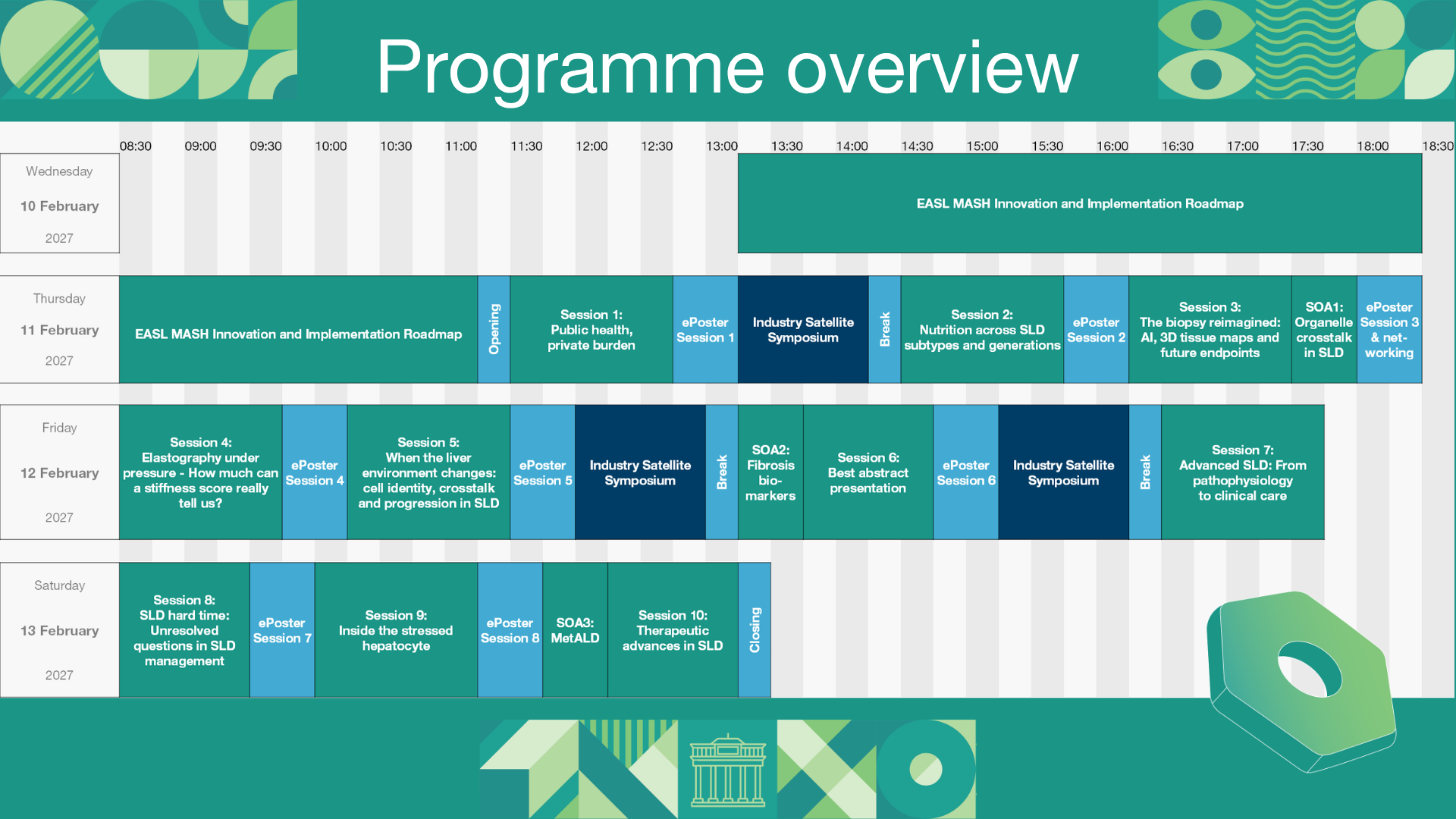
Discover the sessions
Day 1
Session 1 — Public health, private burden: Policy, stigma and the patient voice
The Summit opens on the gap between recognition and change. Three years after the nomenclature shift and against the backdrop of a WHO resolution, this session asks whether renaming a disease and passing a resolution have actually moved health systems, reduced stigma, or reached the patient. With the diabetologist’s and the obesity specialist’s perspectives, it confronts the hidden, cross-specialty burden of SLD and the uncomfortable possibility that policy progress and patient experience have diverged.
Session 2 — Nutrition across SLD subtypes and generations
Nutrition is reframed here as therapy rather than lifestyle advice, and across the life course. Talks move from nutritional care in alcohol use disorder — beyond abstinence, to the adolescent exposome of alcohol, ultra-processed food and inactivity, and finally to the MASLD “calorie myth,” interrogating whether dietary composition matters more than quantity. The through-line is that the same nutritional levers act differently across SLD subtypes and generations.
Session 3 — The biopsy reimagined: AI, 3D tissue maps and future endpoints
This session puts the liver biopsy on trial. It asks whether AI can read histology better than expert pathologists, what three-dimensional tissue mapping adds beyond the two-dimensional section, and how trial endpoints should be redefined in a post-biopsy era.
State-of-the-Art 1 — Organelle crosstalk in SLD
A deep-dive lecture on how intracellular spatial organisation and organelle communication shape liver-cell function in steatosis, setting a mechanistic foundation for the days that follow.
Day 2
Session 4 — Elastography under pressure: How much can a stiffness score really tell us?
A field guide to which elastography tools actually predict outcomes, followed by the harder question of whether a measured change in stiffness reflects a true change in disease — the core of treatment-response monitoring. The session then crosses from measurement to mechanism, examining how matrix stiffness itself reshapes liver-cell behaviour. It is a rare and welcome attempt to connect the kPa on the report to the biology generating it, rather than treating the number as an oracle.
Session 5 — When the liver environment changes: cell identity, crosstalk and progression
Here the focus shifts to the microenvironment as a driver of disease. Spatial macrophage niches in MASH, mitochondrial crosstalk linking the steatotic liver to the stressed heart, and the reprogramming of cell fate from repair toward fibrosis together make the case that progression is dictated as much by tissue context as by the hepatocyte in isolation.
State-of-the-Art 2 — Fibrosis biomarkers without a gold standard
A lecture on the pragmatic art of combining diagnostic tools to stage fibrosis in the absence of a true reference standard — a methodological problem the rest of the programme keeps circling back to.
Session 6 — Best abstract presentations
A platform showcasing four top-ranked submitted abstracts, giving primetime to emerging and unpublished work.
Session 7 — Advanced SLD: From pathophysiology to clinical care
This session addresses the sharp end of the disease. It opens with the sinusoidal, beyond-collagen basis of portal hypertension in advanced SLD, moves to the prevention of decompensation and the increasingly important concept of re-compensation, and closes on whether bariatric surgery is friend or foe in advanced disease. The result is a continuous line from sinusoidal pathophysiology to concrete decisions in the cirrhosis clinic.
Day 3
Session 8 — SLD hard time: Unresolved questions in management
A deliberately uncomfortable session on the methodology of MASH trials. It tackles the ethics of placebo arms now that effective therapy exists, the silent crisis of screen failure that quietly undermines trial feasibility, and the recognition and management of non-responders to anti-MASH therapy. This is where the field’s rigour — or lack of it — is laid bare.
Session 9 — Inside the stressed hepatocyte: Adaptation, metabolism and cell fate
Returning to the cell, this session examines lipid overload and hepatocyte reprogramming in MASLD, the heterogeneity of hepatocyte responses under metabolic stress, and what happens in alcohol-related injury when adaptive stress responses fail. The emphasis is that not all hepatocytes respond alike — and that failure of adaptation, not merely the insult, determines fate.
State-of-the-Art 3 — MetALD: Can we treat a disease we cannot yet define?
A lecture on the conceptual and clinical no-man’s-land between metabolic and alcohol-related disease, and the awkwardness of designing therapy for an entity still searching for a stable definition.
Session 10 — Therapeutic advances in SLD: Current standards and future directions
The Summit closes on treatment: updates on approved MASH-targeted therapy under the EASD–EASO–EASL guidance, the current and emerging options in ALD, and the mechanisms and targets shaping the next generation of SLD therapeutics. It closes the loop opened on day one — translating the policy urgency and mechanistic insight of the preceding sessions into what we can, and soon may, actually prescribe.
Welcome to Berlin!
EASL Steatotic Liver Disease Summit 2027 will take place in Berlin, Germany at the Estrel Hotel Berlin.
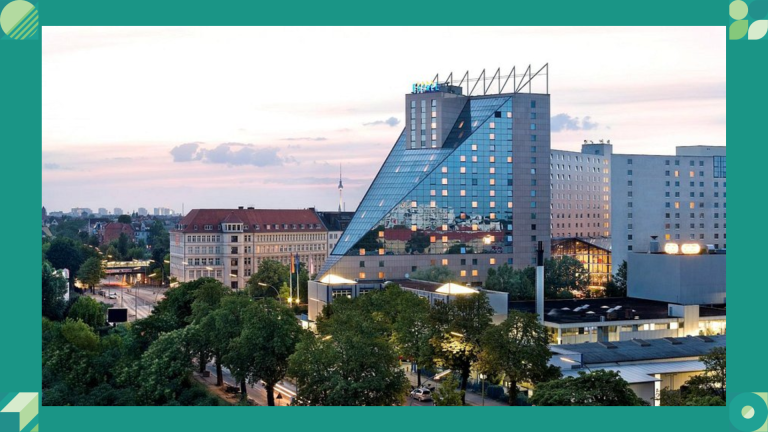
Venue address:
Estrel Hotel Berlin, Sonnenallee 225,12057 Berlin, Germany
How to access the venue?
By public transportation
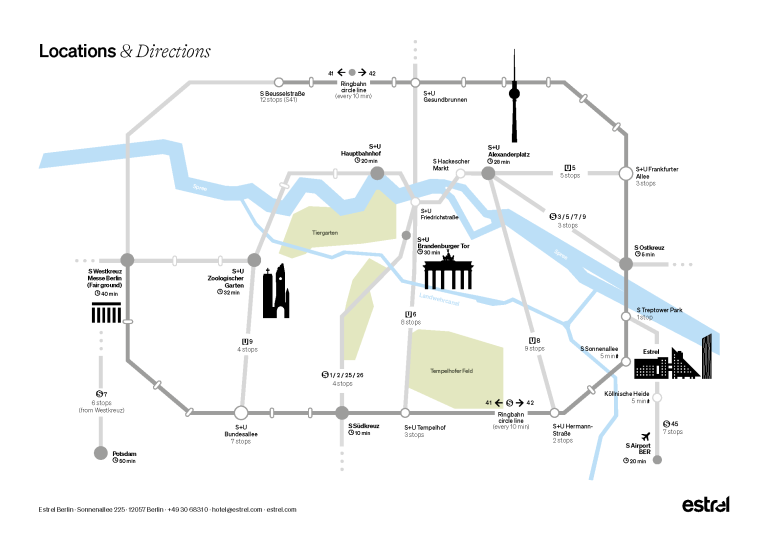
The Estrel Berlin is easy to reach both by car and when using public transport. Highway access is only 150 metres away, and the distance to the Berlin Brandenburg Airport (BER) is 13km. The Sonnenallee S-Bahn commuter train station can be reached on foot in only three minutes, and a bus stop and taxi rank are located right in front of the hotel.
From Berlin-Brandenburg Airport BER Terminal 1 – 2
S-Bahn S45 (direction Südkreuz) to station ”Köllnische Heide“ and then bus M41 (direction ”S+U Hauptbahnhof“) to ”Ziegrastraße“ (Estrel)
Public transport journey duration: approximately 30 minutes
Taxi journey duration: approximately 20 minutes
or
Bahn FEX oder Regionalbahn RB7 direction ”Hauptbahnhof“ to station ”Ostkreuz“ and then S-Bahn 41 (circle line – direction clockwise) to station ”Sonnenallee“ (Estrel)
Public transport journey duration: approximately 40 minutes
Taxi journey duration: approximately 20 minutes
From Berlin-Brandenburg Airport BER Terminal 5
Bus 171 from S-Bahn station ”Berlin-Schönefeld“ to station ”Sonnenallee“ or S-Bahn S9 (direction ”Spandau“) to station ”Treptower Park“, then S-Bahn S41 (circle line – direction clockwise) to station ”Sonnenallee“ (Estrel)
Public transport journey duration: approximately 30 – 45 minutes
Taxi journey duration: approximately 20 minutes
From Berlin Central Train Station (Hauptbahnhof)
Bus M41 (direction ”Baumschulenstraße“) to ”Ziegrastraße“ or any S-Bahn in east driving direction to station ”Ostkreuz“ (S3 / S5 / S7 / S75) or station ”Treptower Park“ (S9), then S-Bahn S41 (circle line – direction clockwise) to station ”Sonnenallee“ (Estrel)
Public transport journey duration: approximately 25 minutes
Taxi journey duration: approximately 20 minutes
Public transport tickets
To reach the Estrel using Berlin’s public transport facilities, you will require a single journey ticket for the AB zone costing 3.80 EUR (Exception: Please note that when travelling from the Berlin-Brandenburg Airport BER, you will require an ABC zone ticket costing 4.70 EUR). You can purchase tickets at the BVG service counters, the BVG ticket vending machines located in the S-Bahn and U-Bahn stations or on busses directly from the driver.
Parking facilities for visitors
The Estrel has its own underground parking garage offering 450 parking spaces, which is accessible through the Ziegrastraße.
Accommodation

A limited number of rooms are available. EASL has negotiated a special rate for summit delegates. The rates vary according to the type of accommodation requested.
Full payment is required in order to receive your hotel voucher and to confirm your hotel room(s).

Congrex Switzerland Ltd has been appointed as the EASL official housing agent. Their team of experts have been negotiating on your behalf to offer preferential rates in the most strategic hotels, location and quality wise.
Visit their secured accommodation website to find the up to the minute availability and get access to the best deals! Book early to avoid disappointment.
Alternatively, if you have group requirements, their dedicated team would be delighted to work on a personalised proposal for you. Please email them on hotel.easl@congrex.com
How to get a VISA for EASL Steatotic Liver Disease Summit 2027

A limited number of rooms are available. EASL has negotiated a special rate for summit delegates. The rates vary according to the type of accommodation requested.
Full payment is required in order to receive your hotel voucher and to confirm your hotel room(s).
To obtain your EASL Steatotic Liver Disease Summit invitation letter, you must first finalise and pay your onsite registration and then request your invitation letter.
The “Visa invitation letter” button is available on the registration platform.
A Schengen visa from any member country allows travelers to visit all Schengen countries and move freely for up to 90 days.
EASL applied for CME accreditation of the EASL Steatotic Liver Disease Summit 2027.
More information on CME credits will be available soon.
Sponsors & Industry Partners
EASL Steatotic Liver Disease Summit is a fantastic opportunity to present your latest products and science, highlighting your role in SLD. Book your exhibition space or sponsored session slot, contact our team to discover available opportunities at industry@easloffice.eu.
Sponsorship deadlines:
- Distribution of Industry Prospectus (upon request) – 14 August 2026
- Order deadline for assignment by ranking – 18 September 2026
- Opening “first come first served” assignment – 19 September 2026
- Order deadline for exhibition stands – 6 January 2027
Italian regulations for pharmaceutical companies
Any pharmaceutical companies producing drugs in Italy and participating as sponsors or exhibitors at this event must be registered at the Italian Ministry of Health.
Consult the full information on Italian regulations.
Contact us
EASL Steatotic Liver Disease Summit 2027 will provide sponsors and exhibitors unique opportunities to reach the EASL Community worldwide. Contact us to join us on this journey!

Press and Media Guidelines for EASL Steatotic Liver Disease Summit 2027
Introduction
The European Association for the Study of the Liver (EASL) welcomes media representatives to cover EASL Steatotic Liver Disease Summit 2027. These guidelines outline the rules and requirements for press accreditation, media access, embargo policies, and content usage to ensure fair and responsible reporting.
Press Accreditation and Registration
Eligibility
Accreditation is available to:
- Journalists (print, online, and broadcast media) with a verifiable editorial role and a demonstrated focus on liver disease, healthcare, or related medical topics.
- Freelance journalists with proof of recent, relevant work in liver disease or healthcare coverage.
- Bloggers and influencers with a significant following in medical and scientific fields, particularly in hepatology or related health areas.
Accreditation is not available to:
- Industry representatives, PR professionals, or marketing personnel.
- Publishers, sales, or advertising personnel.
- Representatives of sponsors or exhibitors.
Application Process
Media representatives must apply for press credentials by submitting:
- A valid press card (or letter of assignment from an editor).
Please note that business cards or membership cards are not accepted as credentials.
AND
- For print journalists: Two recent bylined medical/science articles.
- For broadcast journalists: Links to two broadcast programmes you have worked on with your name mentioned, or a piece to camera.
- For bloggers*, links to two relevant blog posts. * This category will be marked on the quality and relevance of links provided. Being published on a blog does not automatically grant media accreditation.
EASL reserves the right to approve or deny applications at its discretion.
Press Registration
Press registration is free and includes the following services:
- Access to all scientific sessions;
- Access to press releases (if available);
- Interviews arranged with EASL spokespersons upon request.
EASL Steatotic Liver Disease Summit 2027 Embargo Policy
By submitting an abstract to the EASL Steatotic Liver Disease Summit 2027, you agree to abide by this embargo policy. The policy states that authors, presenters and/or their sponsors may not share data or key results from the abstract in any form (print, broadcast or online publication, media release or conference presentation) until this embargo is lifted. Authors, presenters and/or their sponsors may, however, publicise the fact that their abstract has been selected for inclusion in the summit programme before the abstract is officially released. In this context, they may publish the title of their abstract together with the names of the authors and institutions.
All abstracts are under embargo until the publication of the abstract book, which will be released two weeks prior to the EASL Steatotic Liver Disease Summit 2027, 27 January 2027
Please direct any questions or concerns about the EASL SLD Summit embargo policy for authors and presenters to the EASL Steatotic Liver Disease Summit 2027 team at abstracts@easloffice.eu
Photography, Video, and Audio Recording
General Rules
- Photography, video, and audio recordings are strictly forbidden during scientific sessions; in the exhibition area; and poster area, unless authorised by EASL.
- Scientific slides, session recordings, and speaker presentations are copyrighted materials and cannot be reproduced without the author’s written consent.
- EASL will provide official images and footage for media use.
- EASL reserves the right to revoke media access for any unauthorised use of content.
Special Permissions
- Media representatives wishing to conduct interviews must obtain prior approval from the EASL Press Office.
Recorded content must credit EASL Steatotic Liver Disease Summit 2027 and cannot be used for commercial purposes.
Social Media Policy
EASL encourages live coverage of the summit via social media while respecting embargo policies and privacy rights.
Allowed:
- Posting summaries, quotes, and non-embargoed content.
- Sharing EASL official social media updates.
Not Allowed:
- Live streaming or real-time broadcasting of sessions.
- Posting embargoed content before the embargo lift.
- Sharing confidential or unpublished research data.
Industry and Third-Party Media Activities
Sponsored Press Conferences
- Third parties (e.g., industry sponsors, exhibitors) must request approval from EASL for any press conference or media event.
- These events cannot be scheduled during official summit scientific sessions.
Use of EASL Branding
- EASL logos and trademarks cannot be used in third-party materials without prior written permission.
Consequences of Policy Violations
Violation of EASL’s press and media policies may result in:
- Immediate revocation of press credentials.
- Exclusion from the EASL Steatotic Liver Disease Summit and future events.
- Public disclosure of embargo breaches.
Contact Information
For press enquiries contact: EASL Press Office
Email: press@easloffice.eu
EASL looks forward to welcoming media professionals to EASL Steatotic Liver Disease Summit 2027 and appreciates their cooperation in maintaining ethical reporting standards.
FAQ
Click on the topics below to learn more.
Access Badges
Access to all scientific events will only be possible with your personal name badge. All participants are requested to wear their name badges throughout the summit.
EUR 50.00 (incl. VAT) will be charged for replacing a lost badge, and for re-printing due to incorrect submission of names and/or company names or addresses.
Catering
Coffee breaks and lunch are provided on a first-come, first-served basis.
Cloakroom
The cloakroom is located on ground level close to the registration desk will be operating during the summit opening hours.
CME Certificates
EASL has applied for CME accreditation for the EASL Steatotic Liver Disease Summit 2027.
More information on CME credits will be available soon.
Currency
The official currency in Germany is Euro (EUR). All major credit cards are accepted in most hotels, restaurants, and shops.
Event App
The event app will be available for download on 3 February.
Language
The official language of the EASL Steatotic Liver Disease Summit is English.
Registration Desk
The registration desk is located Estrel Hall of the Estrel hotel on level 0.
- Wednesday, 10 February 10:00–19:00
- Thursday, 11 February 10:00–19:00
- Friday, 12 February 08:00–19:00
- Saturday, 13 February 08:00–13:00
Speaker Service Centre
The Speaker Service Centre is located in Conference room passage office (level 0).
- Wednesday, 10 February 10:00–19:00
- Thursday, 11 February 10:00–19:00
- Friday, 12 February 08:00–19:00
- Saturday, 13 February 08:00–13:00
Taxi
Taxi Berlin +49 30 20 20 20
Taxi4Berlin +49 172 9777771
Important notice : Please make sure that you only get into a vehicle marked as a taxi at the designated taxi stands. Outside these areas, there is a risk that fraudulent suppliers will be found.
More details for airport taxi, please click here.
Venue
EASL Steatotic Liver Disease Summit 2027 will take place in Berlin, Germany at the Estrel Hotel.
Estrel Hotel Berlin,
Sonnenallee 225, 12057
Berlin, Germany
Visa
Please find further information here.
Weather
February in Berlin is typically cool, with average daytime temperatures of around 3°C.
WiFi
Free WiFi will be available for participants.
Cloakroom
If you have any questions please contact: easlsummit@easloffice.eu
If you have questions regarding registration please contact: summit.registration@easloffice.eu
For any other questions
- Abstracts: abstracts@easloffice.eu
- Delegates: summit.registration@easloffice.eu
- Invited Faculty: faculty@easloffice.eu
- General: easlsummit@easloffice.eu
- Industry: industry@easloffice.eu
- Membership: membership@easloffice.eu