
EASL Bootcamp: bridging the gap between science & medicine in hepatology
16 – 18 September, 2027
Rotterdam, Netherlands
This new format is designed to help scientists become familiar with clinical terminology, while also enabling clinicians to understand the principles of basic research, including experimental design, commonly used techniques (such as molecular biology, spatial biology and experimental models), and how to interpret scientific results.
The programme will cover essentials of clinical and experimental/translational hepatology. This will help clinicians becoming familiar with the basic principles of basic research, and scientists to understand the clinical aspect of the major liver diseases and familiarise with the clinical terminology.
In the final exercise, scientists and clinicians will be paired to collaboratively design a translational research project, integrating both clinical and basic science perspectives.
School Organisers:
Shilpa Chokshi
Robert de Knegt
Krista Rombouts
Luca Urbani
Please note that the programme is subject to change, and will be updated continuously up to the school event.
Aims
Help scientists become familiar with clinical terminology, while also enabling clinicians to understand the principles of basic research, including experimental design, commonly used techniques, and how to interpret scientific results.
Improve interdisciplinary communication.
Explore patient-centred implications of bench-based hepatology research and clinical innovation.
Collaboratively design a translational research study with clear relevance to both clinical and basic science domains.
Learning objectives
For Basic Scientists
Understand clinical terminology and diagnostic workflows in hepatology.
Interpret clinical data and outcomes in the context of patient relevance and treatment strategies.
Critically assess experimental models in relation to human liver disease pathophysiology, heterogeneity, and staging.
Explore the translational value of molecular targets and biomarkers.
Engage in interdisciplinary teamwork, appreciating the complexity of clinical decision-making and patient perspectives.
For Clinicians
Understand experimental design principles used in translational hepatology research.
Become familiar with laboratory techniques, including omics, imaging, in vitro/ex vivo and animal models.
Critically assess the evidence pipeline from preclinical studies to clinical application, including reproducibility and rigour.
Identify opportunities for research collaboration, including formulating testable hypotheses and integrating clinical insight.
Develop basic science literacy to engage meaningfully with researchers and evaluate experimental hepatology literature.
Top 3 reasons to attend
Transform your perspective. Step beyond your comfort zone: scientists will learn how patients are diagnosed and treated, while clinicians will gain hands-on insight into the experimental tools driving discovery.
Accelerate your career. Acquire the cross-disciplinary skills and translational mindset that funding bodies, journals, and research leaders increasingly expect from the next generation of hepatologists.
Join a community of future leaders. Build lasting collaborations with peers and mentors who share your ambition to shape the future of hepatology through innovation and integration.
Target audience
General
Individuals with solid grounding in either clinical or scientific hepatology, with a demonstrated interest in translational research and motivated to expand interdisciplinary understanding and engage in collaborative learning.
Open to late-stage clinical or scientific trainees and early-career professionals (typically within 0–6 years of completing their medical degree for clinicians or postgraduate degree for basic scientists).
Clinicians
Medical doctors (MD or equivalent) in specialist training (e.g., hepatology, gastroenterology) or up to 3 years post-specialisation.
Interest in gaining research experience and understanding scientific methodology.
Basic Scientists
PhD students, postdoctoral researchers.
Interest in clinical application and patient-oriented perspectives.
Criteria list
General
Individuals with solid grounding in either clinical or scientific hepatology, with a demonstrated interest in translational research and motivated to expand interdisciplinary understanding and engage in collaborative learning.
Open to late-stage clinical or scientific trainees and early-career professionals (typically within 0–6 years of completing their medical degree for clinicians or postgraduate degree for basic scientists).
Clinicians
Medical doctors (MD or equivalent) in specialist training (e.g., hepatology, gastroenterology) or up to 3 years post-specialisation.
Interest in gaining research experience and understanding scientific methodology.
Basic and Translational Scientists
PhD students, postdoctoral researchers.
Interest in clinical application and patient-oriented perspectives.
Meet the organisers




EASL applied for CME accreditation. More information to come soon.
EASL Schools of Hepatology
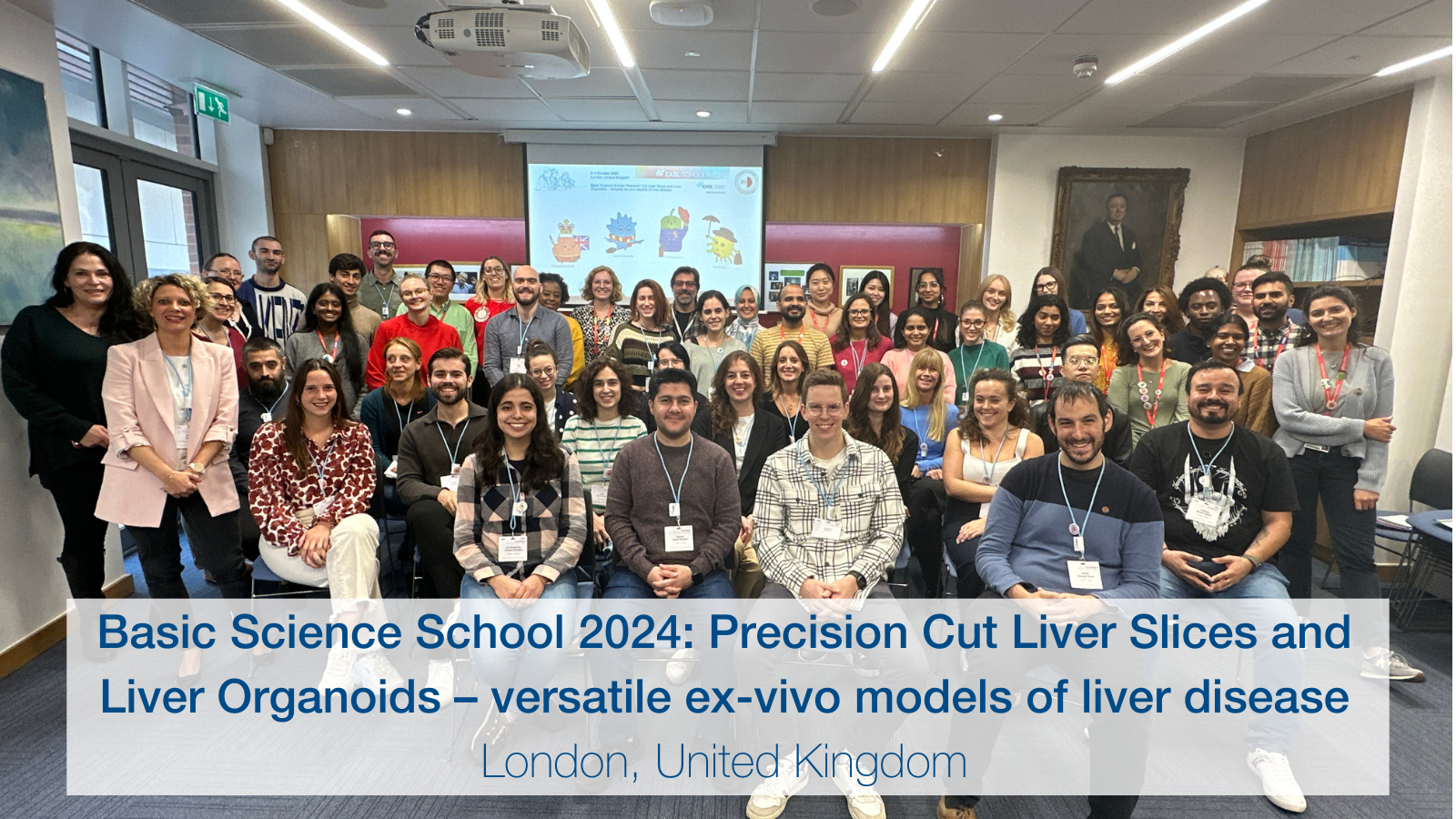
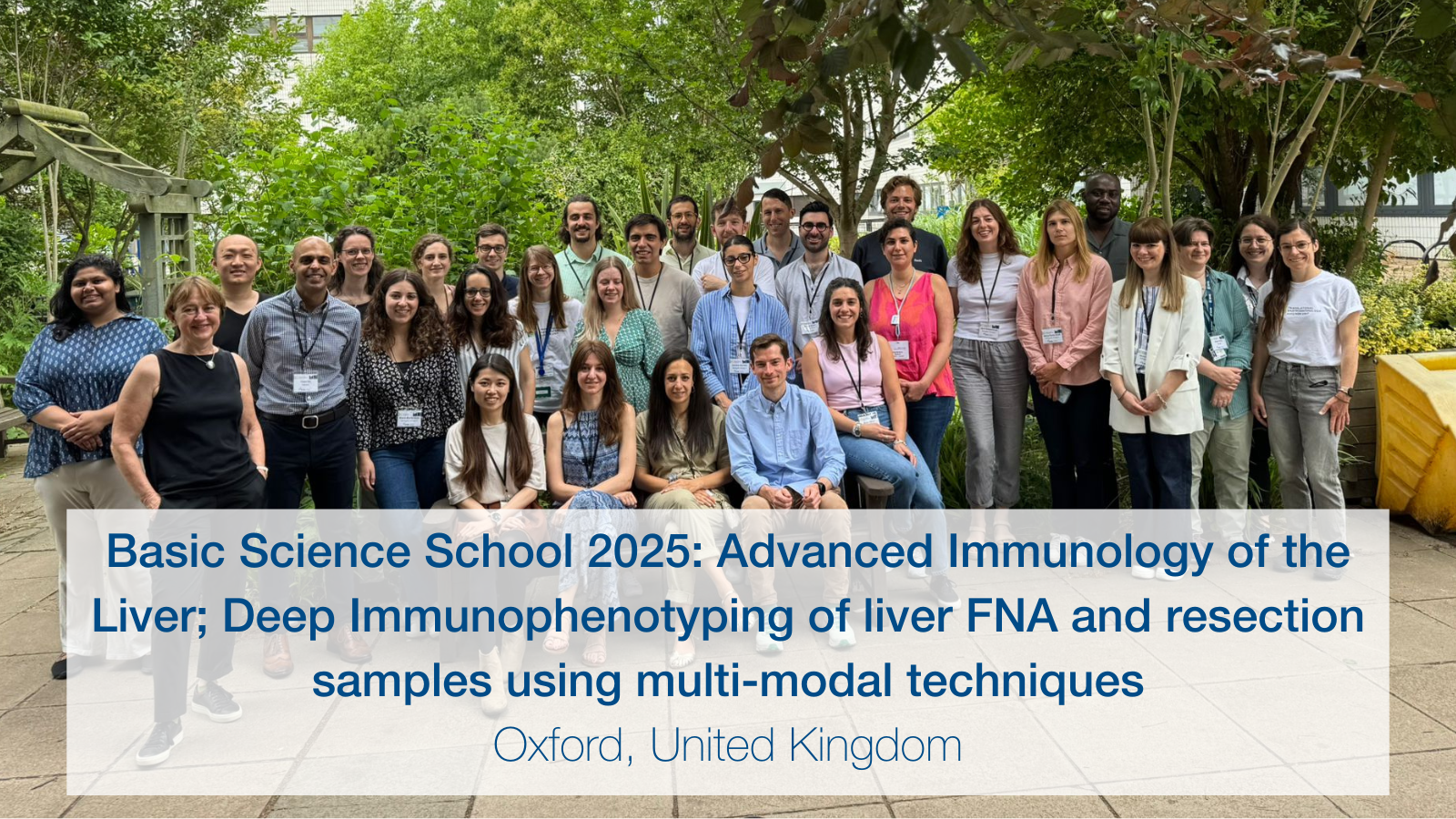
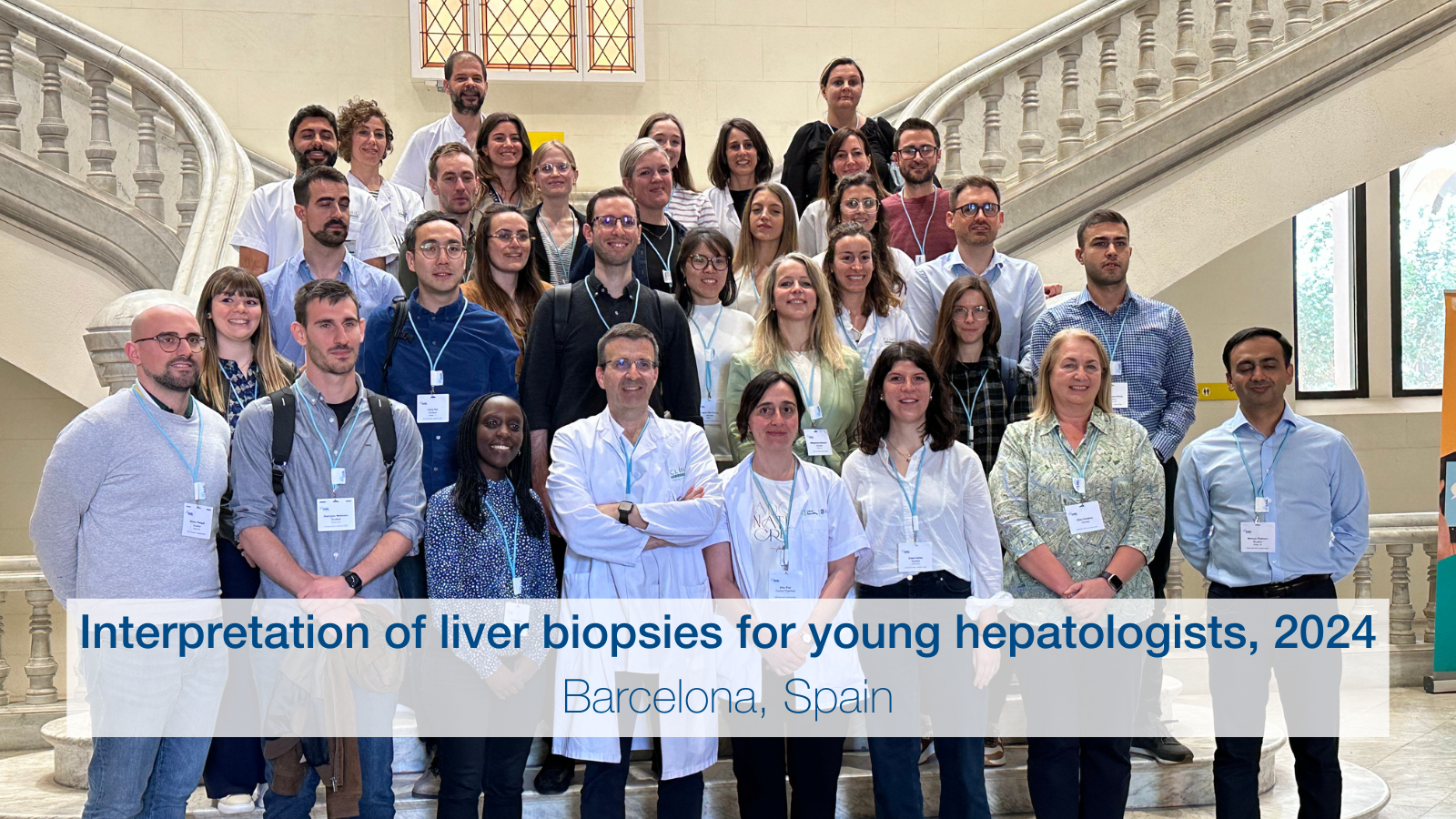
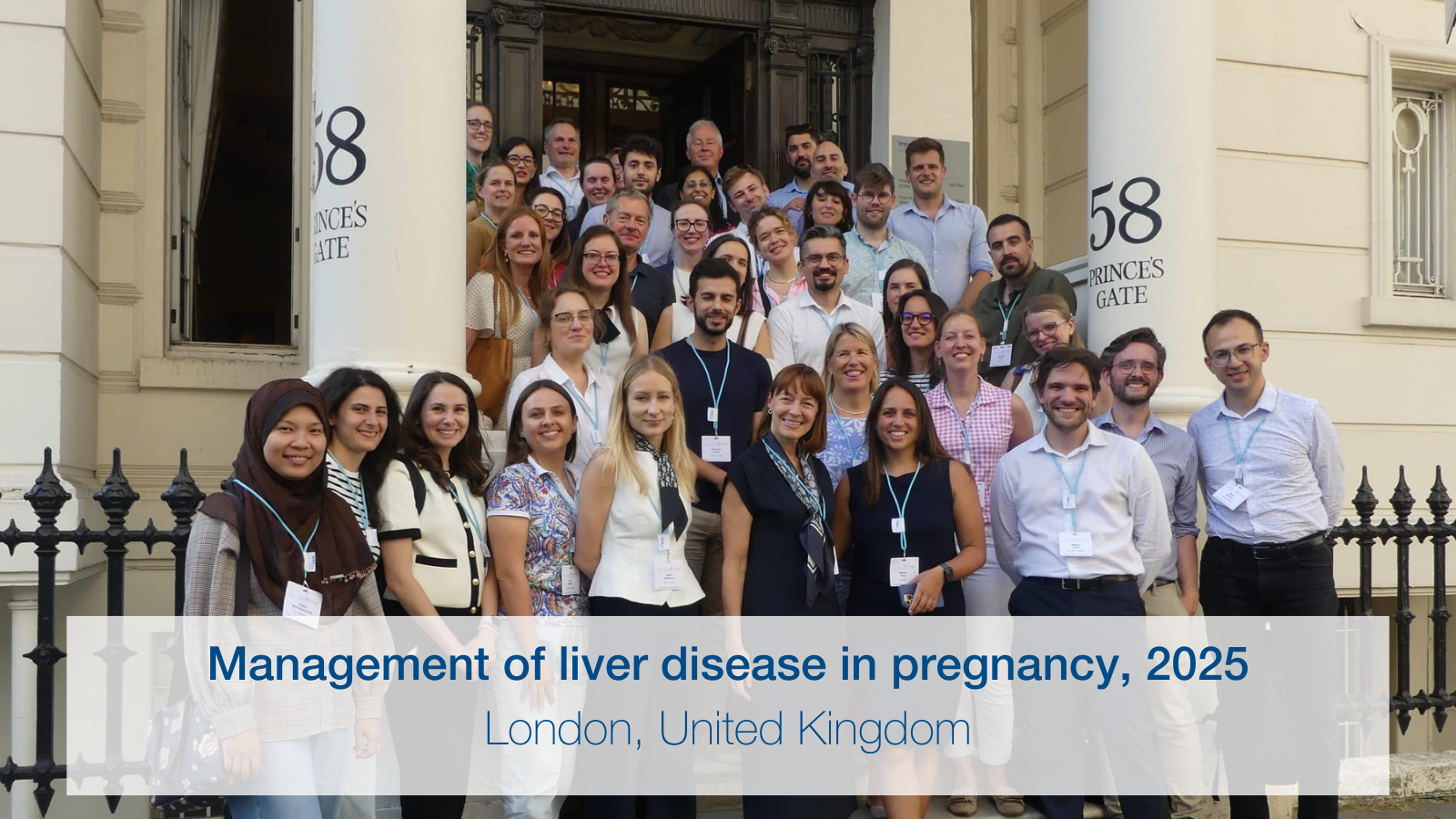
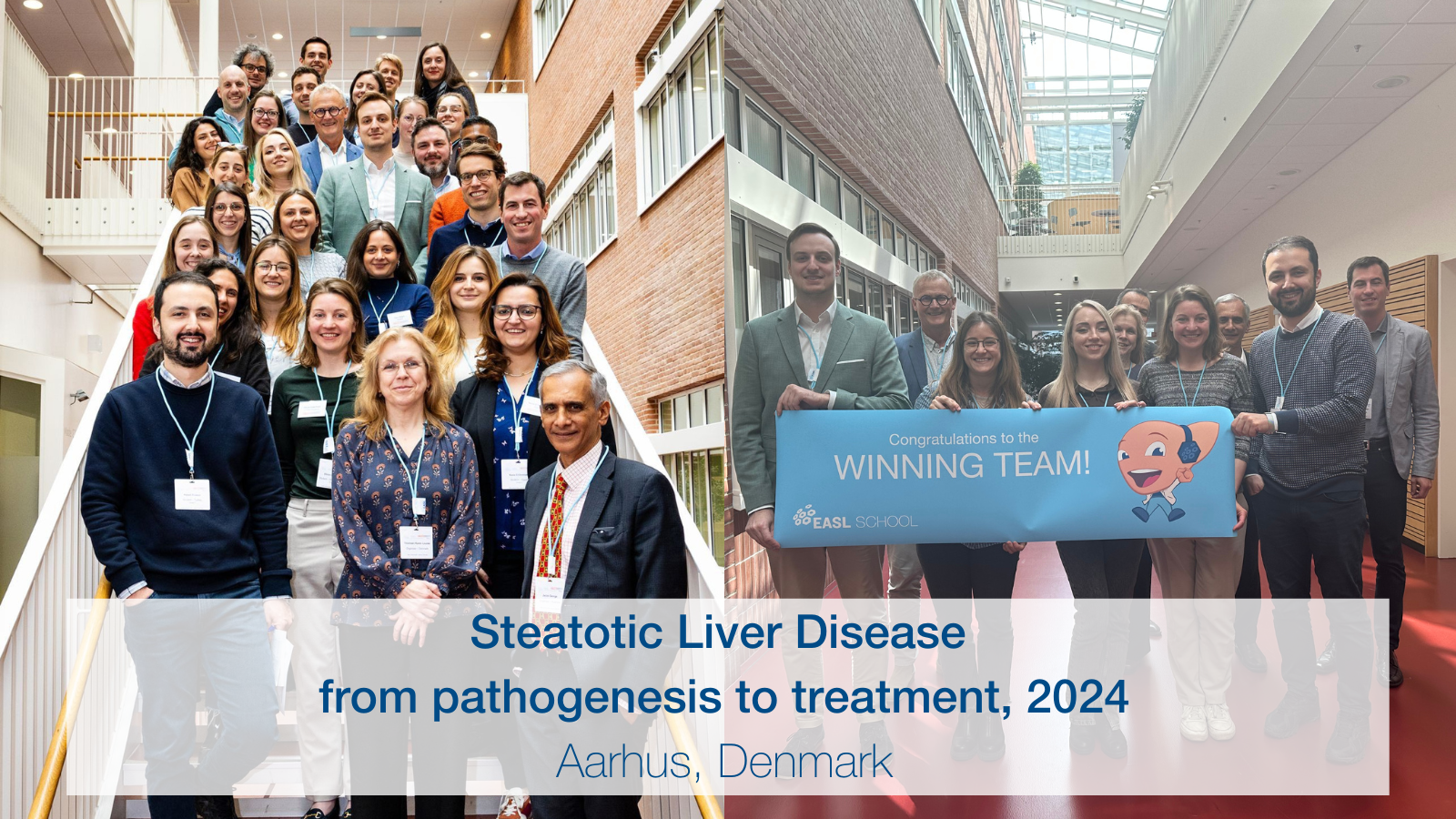
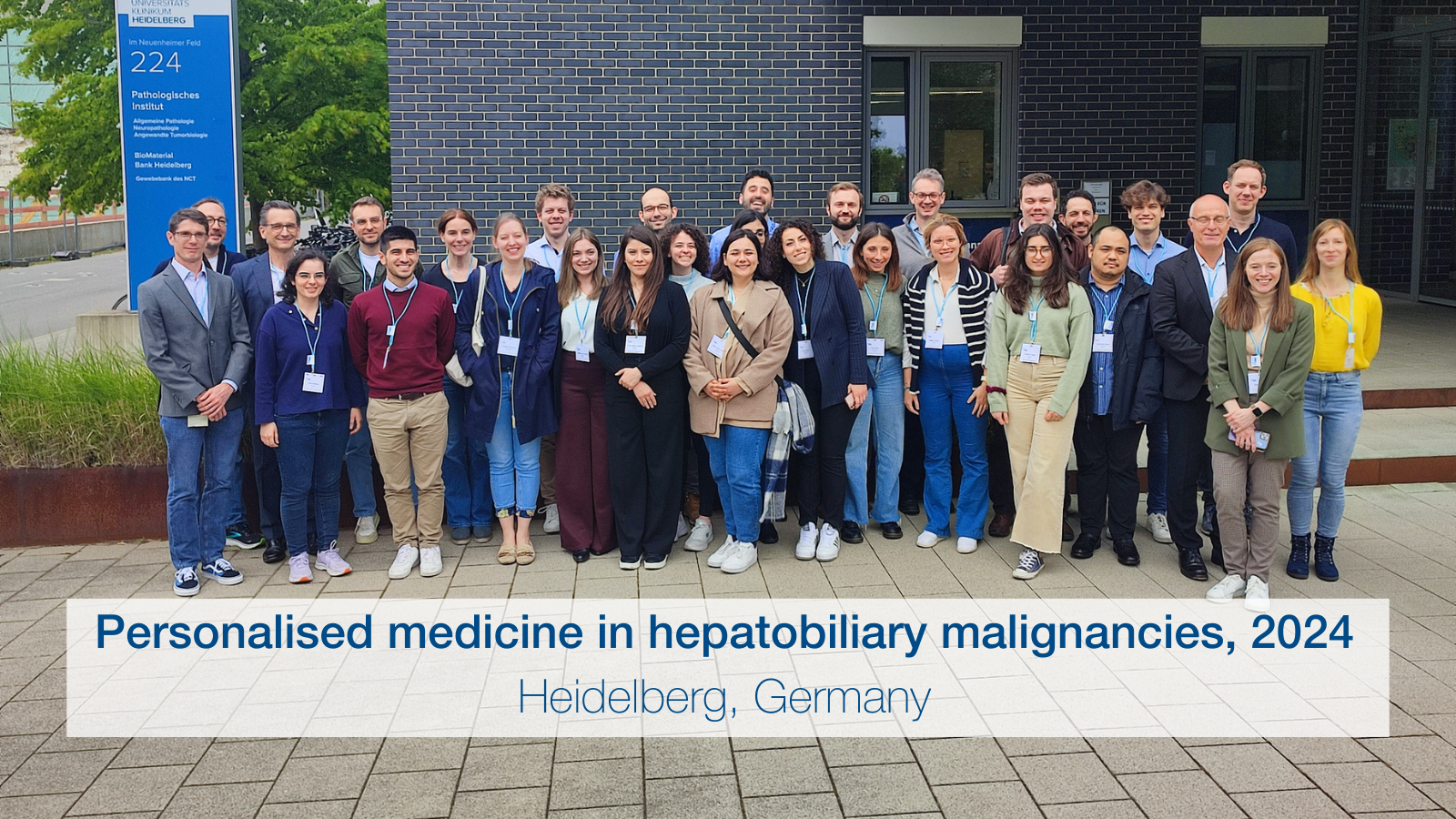
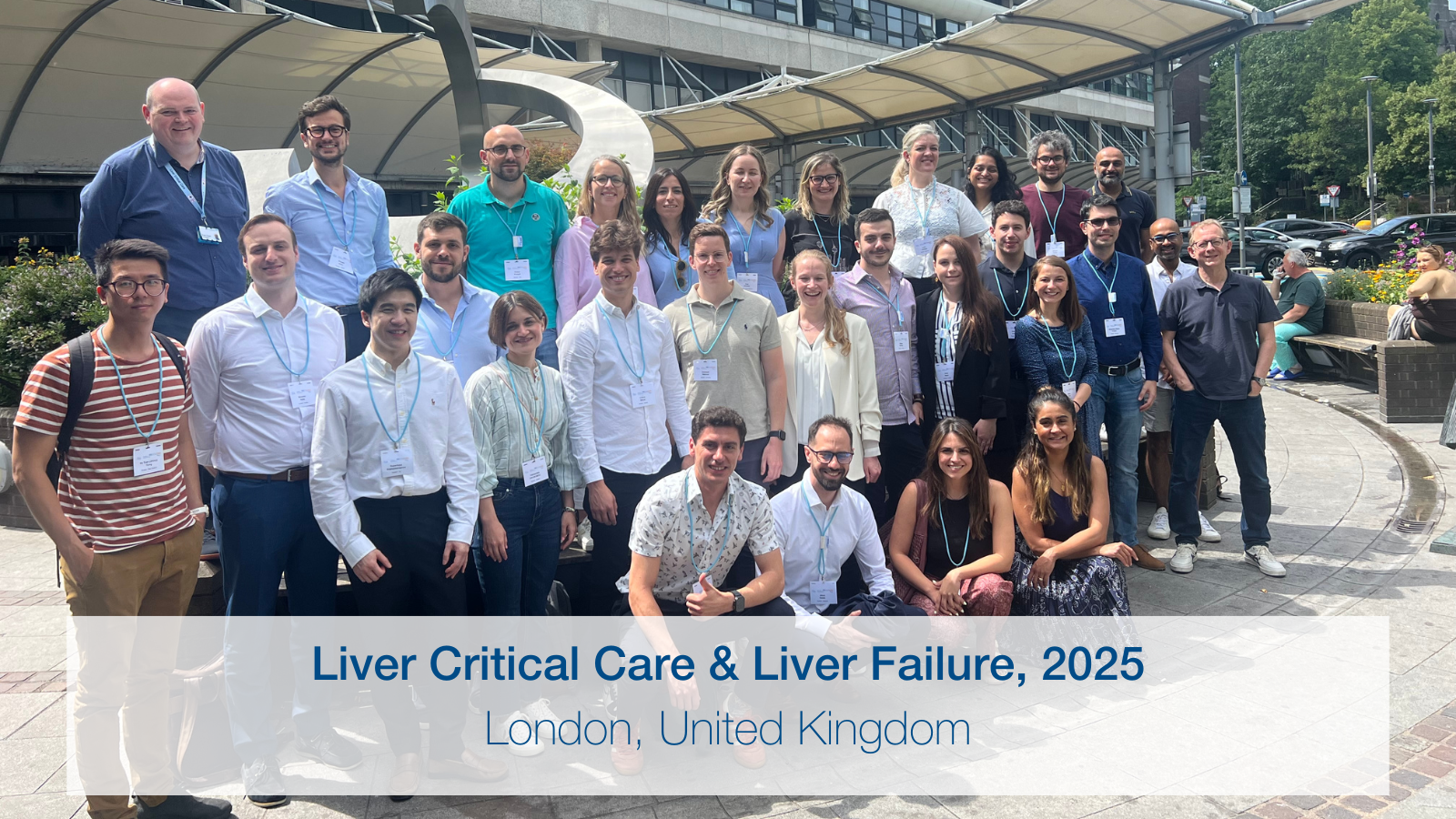
The EASL Schools help train the next generation of hepatologists and scientists. Through individual work, collaborative teamwork and discussions with faculty, students gain invaluable insight into new experimental techniques and clinical approaches.
The format, designed to host 25 students, is “flipped-classroom” based, learner-centric and problem-oriented. Preparation for the onsite learning consists of online course(s) and educational materials hosted on EASL Campus and provided by the school organisers. Students are expected to take the online course(s) and complete the pre-assessments in the month preceding the start of the EASL School. Once onsite, students should work in small groups under the guidance of experienced tutors (Emphasising on teamwork and cooperation). The post-assessments and surveys are conducted on EASL Campus.
Flipped Classroom Model for Clinical Schools
Read more about the Flipped Classroom Model for Clinical Schools
Flipped Classroom Model for Basic Science Schools
Read more about the Flipped Classroom Model for Basic Science Schools
CME Accreditation:
EASL applies for accreditation from the European Accreditation Council for Continuing Medical Education (EACCME) for all its educational activities.
The EACCME is an institution of the European Union of Medical Specialists (UEMS) and EACCME credits are recognised by the American Medical Association towards the Physician’s Recognition Award (PRA).
Details of the number of CME’s accredited per event are available on the event web pages.
I want to organise an EASL School / I am an organiser
Requirements for application
- Only EASL members may apply to host an EASL School. If you are not a member yet, you can become an EASL member now.
- EASL Schools must be hosted in dedicated European centres of excellence and be able to accommodate plenary sessions and breakout groups.
- EASL Schools must be led by experts of the hosting institution (Maximum 2 external experts are allowed).
- EASL Schools programme must not exceed 2 days.
- EASL strongly recommends maintaining a minimum gender balance ratio of 70% to 30% among the faculty participating in the EASL School programme.
The proposals will be reviewed by the EASL Educational Committee. EASL will allocate a dedicated budget to the successful applications. EASL office will provide the successful applicants with the related information and guidelines.
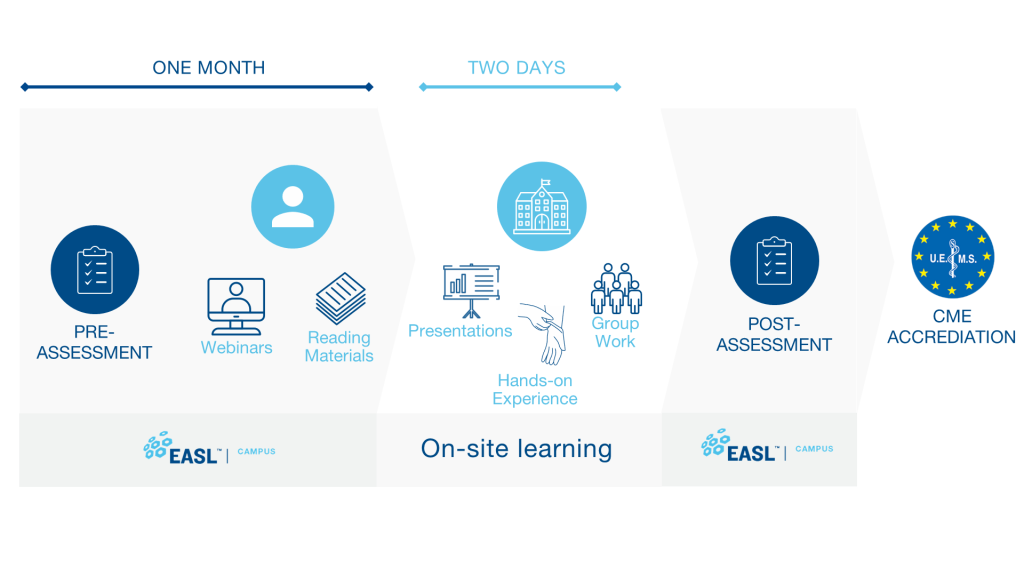
Clinical EASL Schools
The programme must be based on the following structure:
Before the EASL School:
- Pre-assessments of the students through EASL Campus (online courses, live webinars, quizzes etc.).
- Group assignment.
Day One:
- Clinical cases study: Student groups are assigned complex clinical cases with tutors to guide them.
Day Two:
- Clinical cases presentations and selection of the winning group.
- State-of-the-art lecture by a renowned expert.
- Students’ evaluation of the school programme and format (Mandatory).
After the EASL School: Post-assessment tests and accreditation of the students through EASL Campus.
To learn more about this EASL School format, discover this year’s schools:
Management of liver disease in pregnancy, 20-21 June 2025, London (United Kingdom)
Liver Critical Care & Liver Failure, 20-21 June 2025, London (United Kingdom)
Basic EASL Schools
The programme must be based on the following structure:
Before the EASL School:
- Pre-assessments of the students through EASL Campus (online courses, live webinars, quizzes etc.).
- Group assignment.
Day One:
- Experimental hands-on sessions.
Day Two:
- Experimental hands-on sessions.
- State-of-the-art lecture by a renowned expert.
- Students’ evaluation of the school programme and format (Mandatory).
To learn more about this EASL School format, discover this year’s school Advanced Immunology of the Liver; Deep Immunophenotyping of liver FNA and resection samples using multi-modal techniques 27-28 June 2025, Oxford (United Kingdom).
I am a student
Masterclass
Selected participants will attend a two-day intensive training session with a curriculum designed for future leaders in academic hepatology. The programme consists of academic lectures, interactive break-out sessions, individual meetings with tutors, abstract presentations, a poster session, and social events to give early-stage investigators (MD, PhD, or MD/PhD, or equivalent) the opportunity to network with world leaders in hepatology.
*This year, all Masterclass applications must be submitted through the AASLD platform, and creating an AASLD account is required.
Key Dates
29 Jul – 28 Sep, 2026
Application deadline
05 Dec, 2026
Notification date
16 – 18 Sep, 2027
School days